
Switch instrument:
Virtual tour
Tyrex-2
Polarised helium-3 filling station
Tyrex-2 - Polarised helium-3 filling station
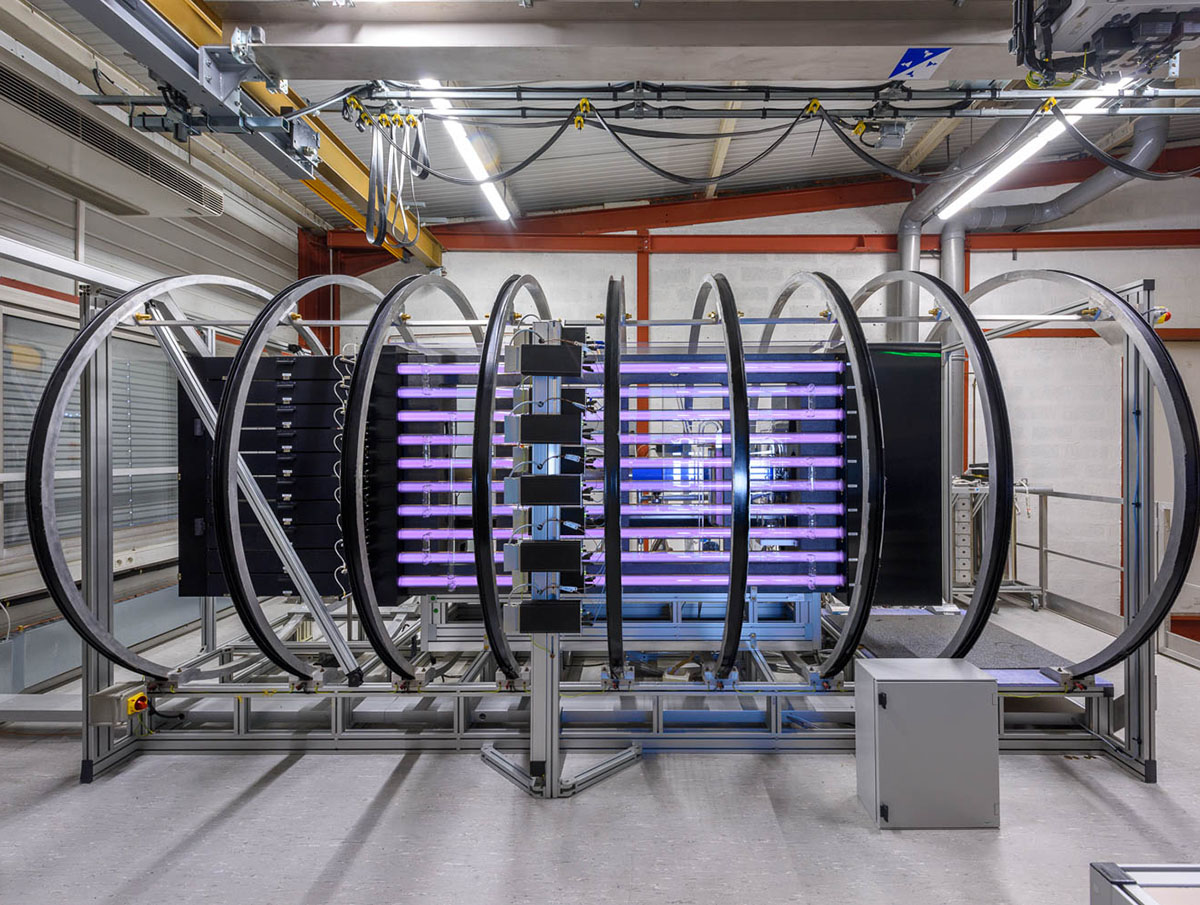
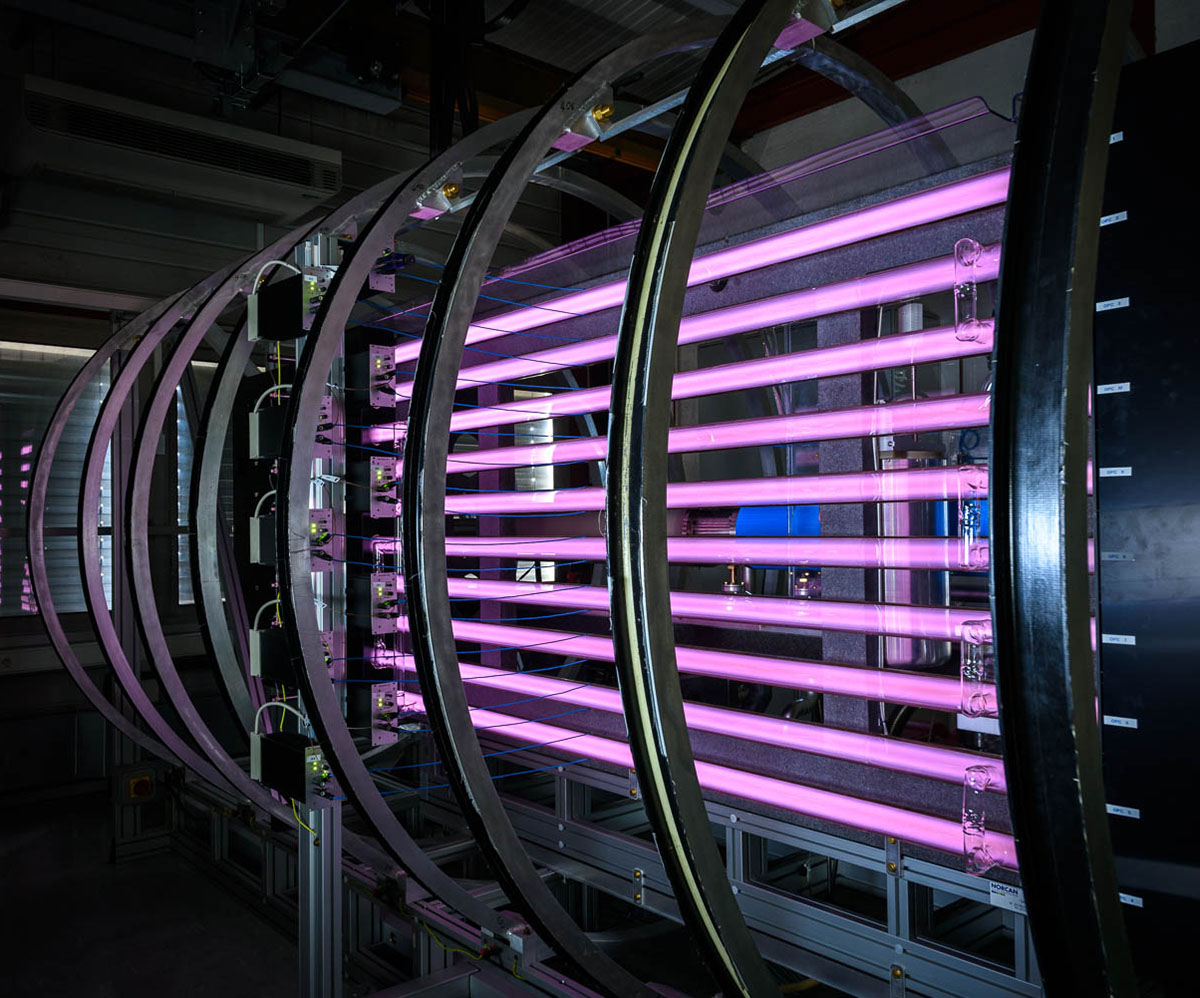
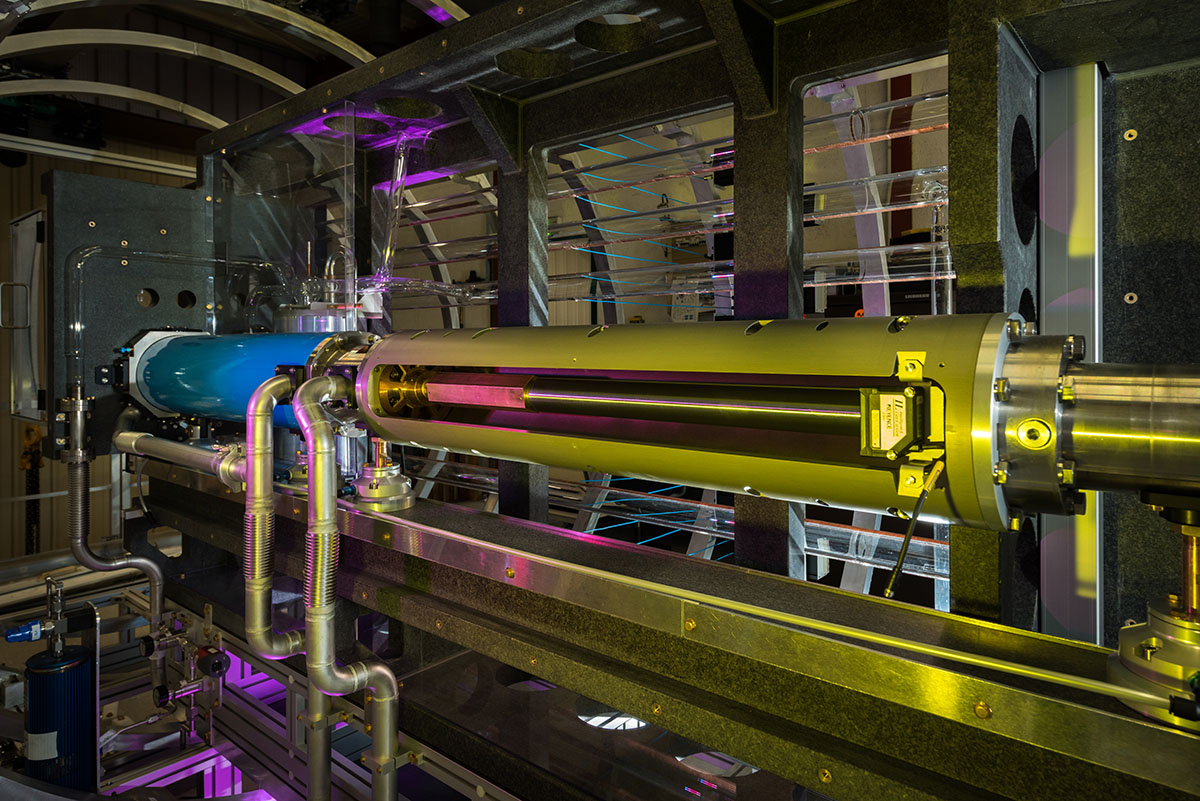
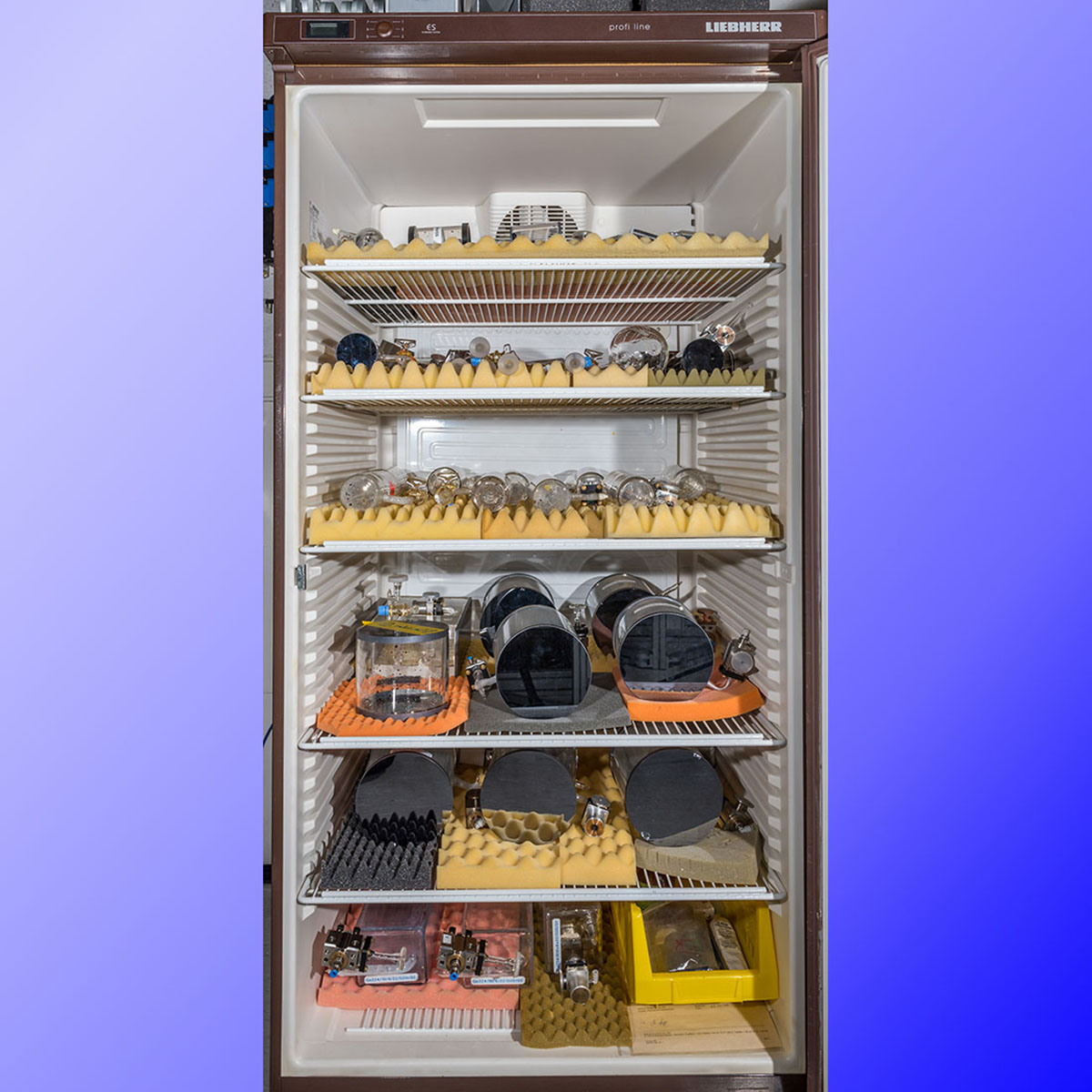
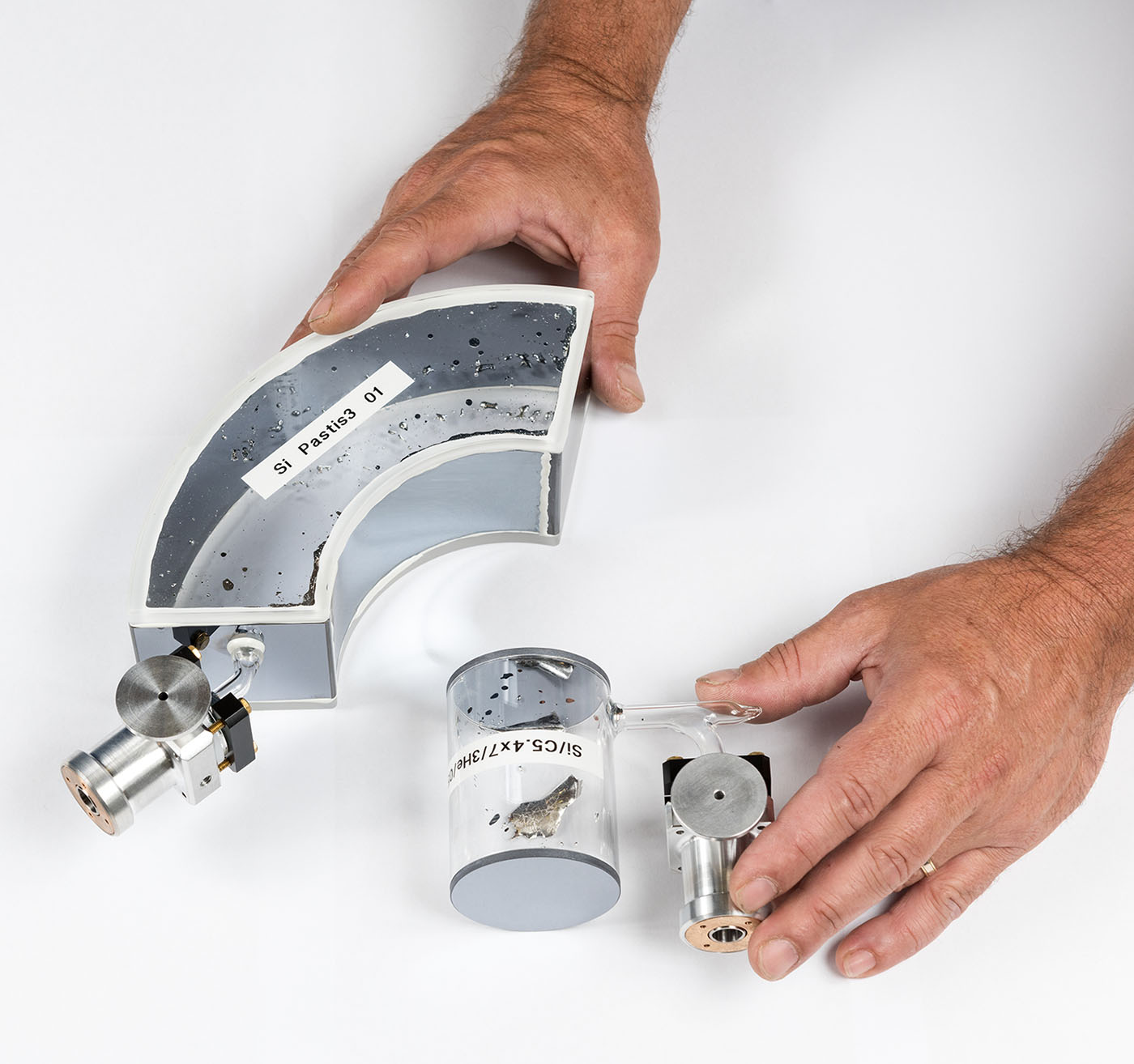
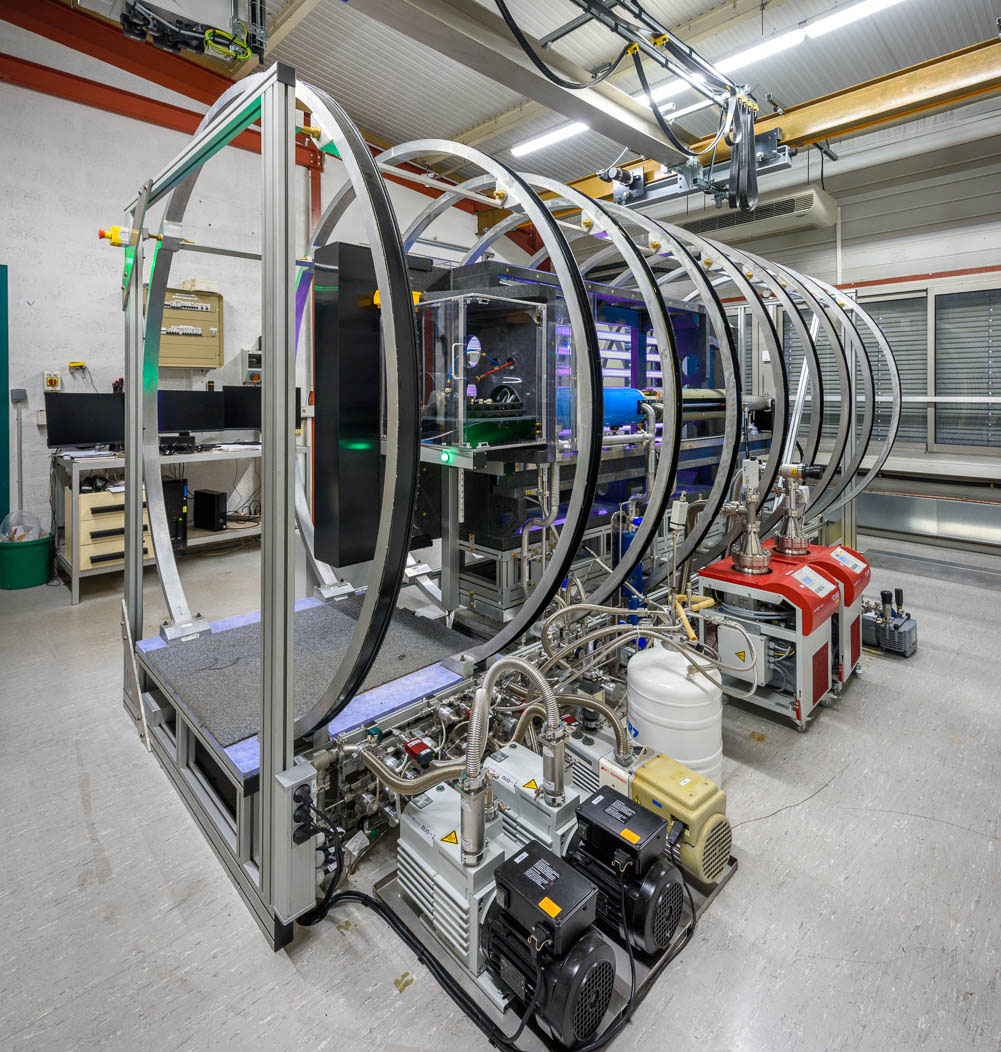
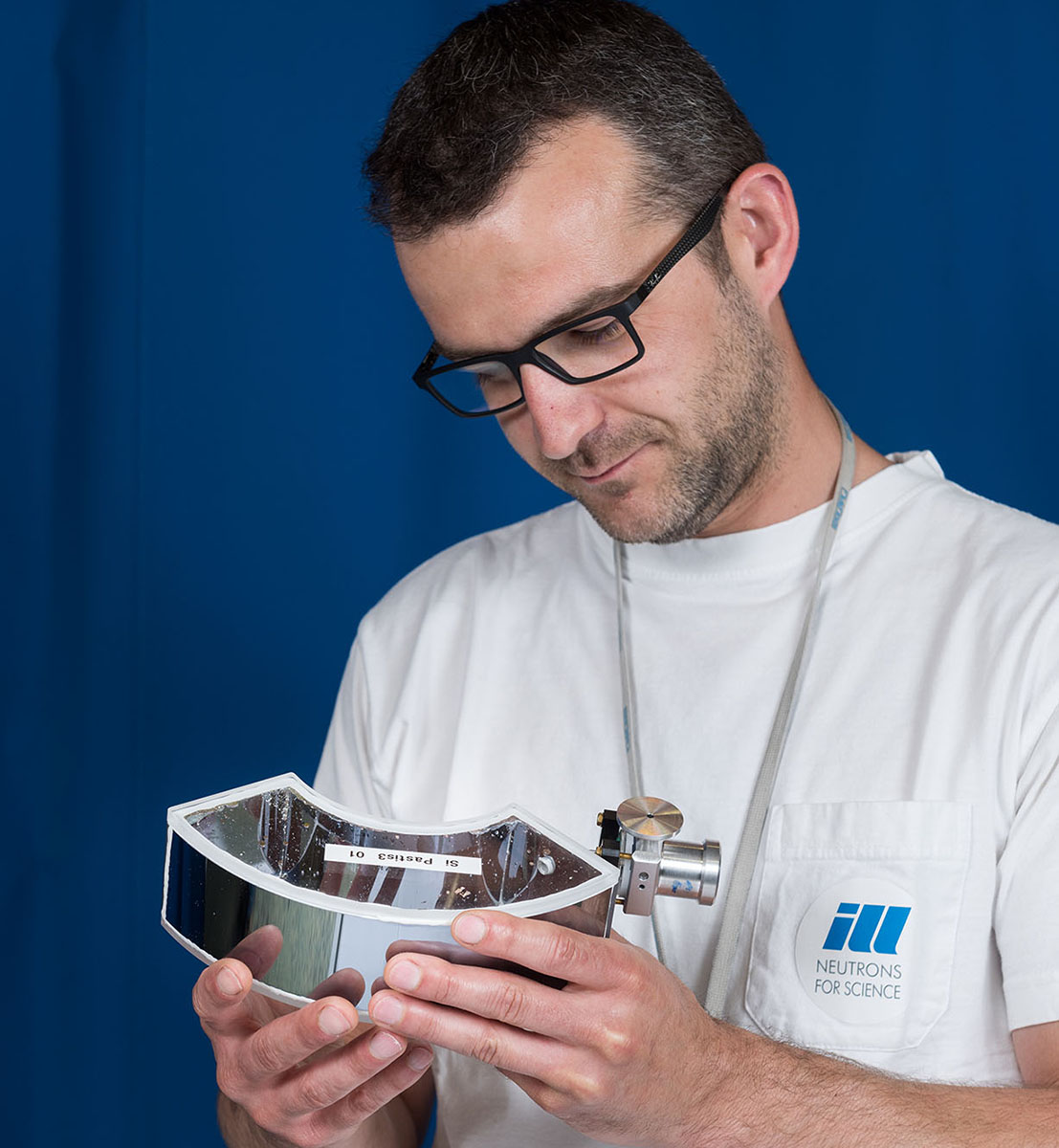
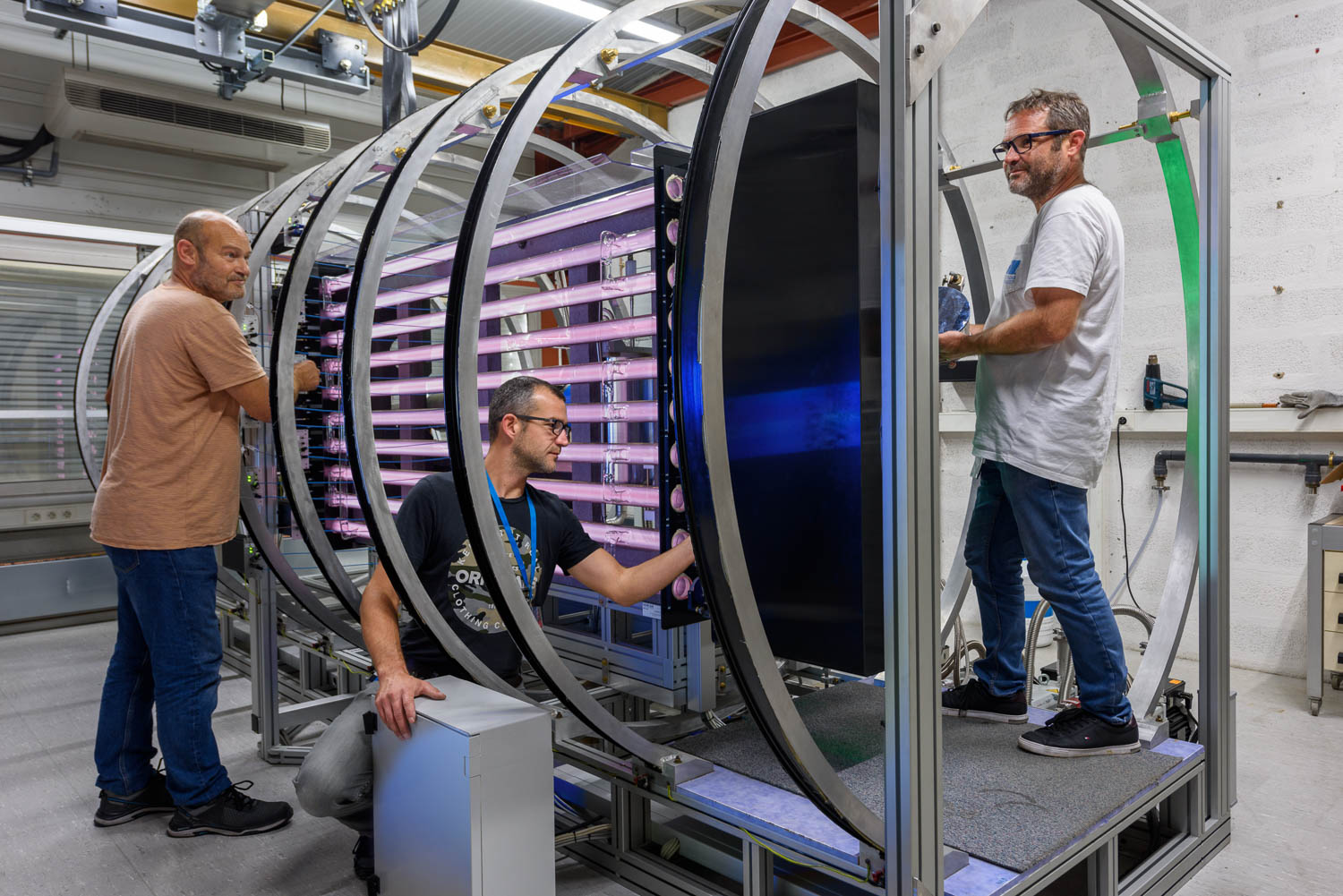
Photo gallery
- Tyrex-2 at work and its team: from left to right: Philippe, Nicolas, David.
- Another overall view of Tyrex-2 as seen from the laser side.
The 3He gas is circulated in 10 horizontal tubes where the lights of the lasers polarises the 3He atomic spins through a Metastability Exchange Optical Pumping (MEOP).
The 9 vertical magnetic coils apply to the assembly the magnetic field required to maintain the polarisation of the 3He atoms. - A closer view of the stack of lasers.
- Tyrex-2 as seen from the compressor and filling station side.
- A closer view of the compressor part.
- Two typical 3He cells. The cells are under vacuum (10-9 mbar/L/s), their inside is coated with rubidium distilled at the ILL, and they have a non-magnetic pneumatic valve designed by the ILL's 3He lab.
- Left: 3He analyser cell for PASTIS-3 (IN20). This cell covers an angle of 102° with a gas thickness of 55mm over a height of 50mm. It is made up of curved silicon wafers polished to 10Å and 2 Borofloat plates from Schott assembled at the 3He lab with special glue for vacuum tightness.
- Right: polariser cell (70 mm long, 50 mm in diameter). This cell has two polished silicon windows at 10Å molecularly bonded by the ILL to a borosilicate body also from Schott. It is 50mm in diameter with a gas thickness of 70mm.
- Nicolas shows the cell designed for PASTIS3 (a polarised 3He device, with orientation of the magnetic field in all possible directions) which polarises and analyses neutrons on the TAS spectrometer IN20.
- The variety of polarised 3He cells in use. Their size and shape and the material their walls are made of are adapted to the specific needs of each neutron spectrometer.
The instrument and its team
Polarised neutron beams are essential for certain fields of research, such as the study of the magnetism of matter.
Neutrons can be polarised by reflection (supermirrors), by diffraction (Heusler crystals) or by absorption (polarized 3He).
In the latter case, 3He has to be polarised first and then placed in cells called "spin filters", hence Tyrex-2.
This approach provides very interesting properties:
- simple transmission device, with predictable characteristics
- no impact on the optical functions of the instrument
- can be configured into virtually any shape
- homogeneous polarisation over the entire beam section
- sufficiently wide polychromatism for “Time-Of-Flight” instruments