This website is being migrated. In case you don't find the information you are looking for, the old website can be found here. Thank you for reporting any anomalies to communication@ill.eu.

Radioisotope production for medicine

ILL Ulli_Koester.png
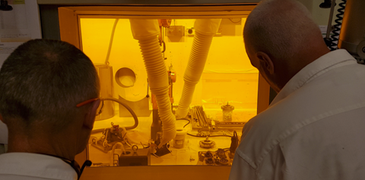
Photo ILL / Ulli Köster

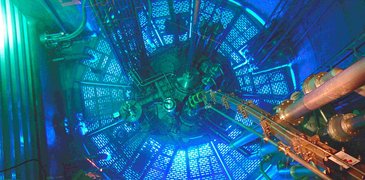
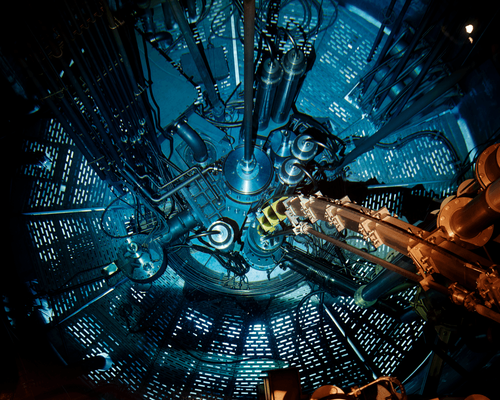
ILL's nuclear reactor is essentially used for producing neutrons for scientific research; however it has also been used over recent years for producing innovative radioisotopes for medical purposes, lutetium-177 to be precise, a very special radioisotope. According to ILL's Ulli Köster "These radioisotopes emit beta rays, capable of covering no more than a few millimetres of distance. They are perfect for treating small metastases". Lutetium-177 has been successfully tested and is already proving effective against certain types of cancer, including prostate and neuroendocrine cancers.

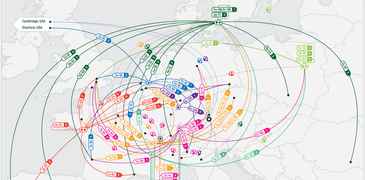
ILL produces lutetium-177 by irradiating a stable precursor, ytterbium-176. The irradiated ytterbium-176 target is then sent to Bavaria, where the radio-pharmaceutical company ITM Radiopharma separates out and purifies the lutetium-177, which is then sent out to hospitals around the world. Tens of thousands of cancer patients have already been treated with this "made in Grenoble" isotope.

ILL also produces other such radioisotopes, such as terbium-161 or scandium-47; they are sent out to partner institutions for radiochemical separation and preclinical and clinical trials.

ILL is keen to expand its radioisotope production. Partnerships are gradually being set up, with the primary aim of increasing production capacity.

Latest News
radioisotopes.png
May 17, 2024 ILL is the chosen partner of Novartis to deliver a new cancer treatment drug
The Swiss company NOVARTIS announced at the Choose France Summit the desire to establish a partnership with the ILL, already a partner of other pharmaceutical companies for radioisotope production for cancer treatment and research. This is part of a plan to create a production unit intended to supply the French market with the first radioligand therapy (RLT) drug for the treatment of metastatic prostate cancer, an investment of close to 30 million euros in France.