This website is being migrated. In case you don't find the information you are looking for, the old website can be found here. Thank you for reporting any anomalies to communication@ill.eu.

News

thumbnails DPG spring meeting 2026   Dresden
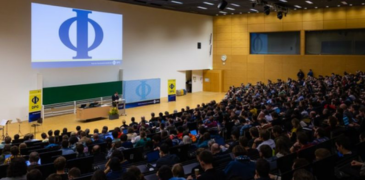
May 8, 2026 Round Table: Novel Opportunities for Cooperation between France and Germany in Neutron Science
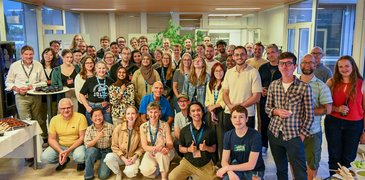
During the Spring Meeting of the Condensed Matter Section of the German Physical Society (DPG), held in Dresden in March 2026, a round table was held on the theme ‘Novel Opportunities for Cooperation between France and Germany in Neutron Science’. The discussion counted on the participation of the directors of the French and German facilities and of representatives of the neutron user association in both countries, SFN and KFN. This is an account of the discussion by Jacques Jestin, ILL Science Director and French Associate Director and one of the participants of the round table.
Neither_solid_nor_liquid_illustration.png
July 10, 2025 Neither solid nor liquid : Neutrons help reveal an exotic state of matter
A team of researchers recently used the thermal-neutron two-axis diffractometer D23 at the ILL to investigate Na2 BaCo(PO4 )2 (NBCP), a material that surprisingly behaves as a ‘spin supersolid’ -a state combining properties of both a solid and a liquid. Neutrons, acting like tiny magnets themselves, were the ideal probes to reveal the hidden magnetic order and dynamics within this material. This discovery, which is also relevant for energy-efficient cooling, provides the first real-life evidence of a supersolid state in a quantum magnet.
2025 06_CommUkleev_2_image.jpg
July 4, 2025 Spinning into the future : polarised neutrons help unravel the mysteries of skyrmions
A recent study, published in Science and Technology of Advanced Materials, and conducted at the Institut Laue-Langevin (ILL), utilised polarised neutron scattering on the D33 instrument to explore skyrmions. This research provided crucial microscopic insights into these magnetic structures. The D33 instrument's unique ability to combine high magnetic fields and  polarised neutrons was essential for understanding skyrmion phase transitions. The findings  can enhance the development of skyrmion-based spintronic devices, which promise lower energy consumption and higher data storage efficiency. The study's methodologies can be applied to other magnetic materials, aiding in the discovery of new phenomena and the development of advanced magnetic materials.