This website is being migrated. In case you don't find the information you are looking for, the old website can be found here. Thank you for reporting any anomalies to communication@ill.eu.

News

251010_ _Dir_Eur_AURA 01.jpg
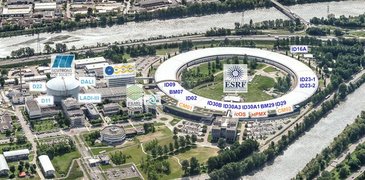
Oct. 21, 2025 €1.8 million invested to modernise two key instruments for European research
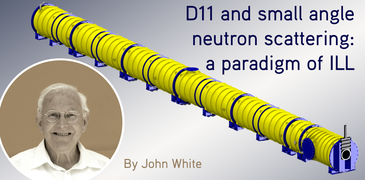
The ILL strengthens its research capabilities by modernising two key instruments (D11 and NeXT-MoTo) to address major challenges in health, energy transition and sustainable technologies. Supported by the Auvergne-Rhône-Alpes Region and the European Union, this project represents a €1.8 million investment under the CPER EPN 2030 (State-Region Plan Contract).
250109_Monoclonal Antobody.jpg
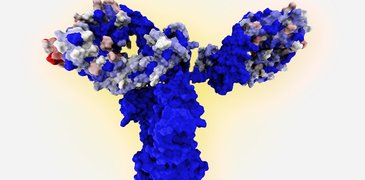
Jan. 10, 2025 Never diffuse alone: understanding antibody teamwork to design tomorrow's therapeutics
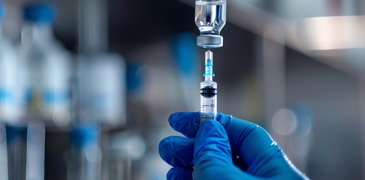
Monoclonal antibodies (mAbs) are used to treat a large variety of diseases. In order to allow patients to inject these therapeutic molecules autonomously, it is crucial to understand the origin of and to control their viscosity. An international team of researchers used an interdisciplinary approach to understand how molecular interactions and motions influence the viscosity of different mAbs. The study has now been published in the journal Molecular Pharmaceutics.
240723_ Peptoid_peptid_hydrogels_ _cover_ _AdobeStock_882758409.jpeg
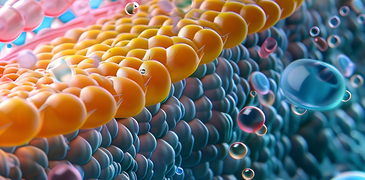
July 23, 2024 Exciting new material for long-acting drug delivery
HIV/AIDS remains a major global health challenge, with an estimated 39 million people living with the disease and 1.5 million new infections each year. Though antiretroviral therapy provides effective treatment and prevention, limitations arise due to inadequate adherence to the required lifelong daily drug regimen. There is thus significant interest in the development of long-acting drug delivery systems that enable consistent and sustained drug release for extended periods. Researchers from Queen’s University Belfast have recently published proof-of-concept of a long-acting drug delivery platform based on a novel peptoid-peptide material. The contribution to this work by the Institut Laue-Langevin (ILL) demonstrates, once again, the facility’s dedication to the provision of neutrons for society.
220310_FICD_AMPylation_deAMPylation.png
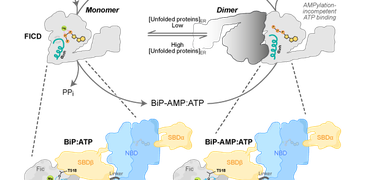
April 6, 2022 Exploring the protein folding chaperones at the heart of our cells
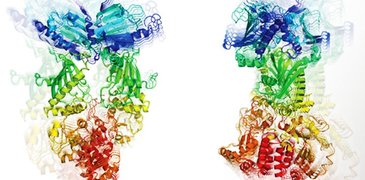
Insulin is a hormone that is rapidly secreted into the blood, following a meal, in order to control blood glucose levels. These pulses of insulin secretion enable the body to take up and store sugar and quickly return blood glucose to normal levels. Diabetes, which affects 1 in 10 people in Europe, occurs when this process goes wrong.The endoplasmic reticulum (ER), a protein-producing compartment…
210707_PEM 1920x1031.png
July 7, 2021 Advanced neutron technologies galvanise research into advanced polymer electrolyte membranes
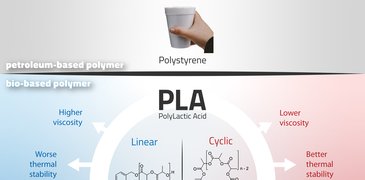
Schematic, cross-sectional view of a PEM fuel cell. Hydrogen fuel is channelled to the anode, while oxygen from air is channelled to the cathode. At the anode, hydrogen is split into protons (H+) and electrons (e-). The PEM allows the protons to cross to the cathode, while the electrons travel vi…