This website is being migrated. In case you don't find the information you are looking for, the old website can be found here. Thank you for reporting any anomalies to communication@ill.eu.

Large Scale Structures

The Large Scale Structures (LSS) group operates a set of instruments are dedicated to measuring structures on the scale of <1 to several 100 of nanometers. Information on these large scales is obtained by measuring at especially low Q, exploiting neutrons from each of the ILL reactor's cold sources.  Although the instruments all exploit cold neutrons they fall naturally into three classes:  small-angle scattering instruments, diffractometers and reflectometers. An overview of instrument parameters is provided in the instrument pages. The group benefits largely from in-house support laboratories.

Activities within the group support a wide range of science from atomic resolution bio-macromolecular crystallography, biological structures in solution, soft condensed matter, materials science, magnetic structures and physics. All the machines are world leading in their kind. All LSS instruments have been either recently built or recently upgraded. A large number of ILL students benefits from LSS instrumentation and related activities. Beamtime in our machines is often sold for industrial applications.

First-time users of the ILL are encouraged to contact one of the group scientists having a similar field of interest before submitting a proposal for use of one of the group instruments.

LSS Instruments

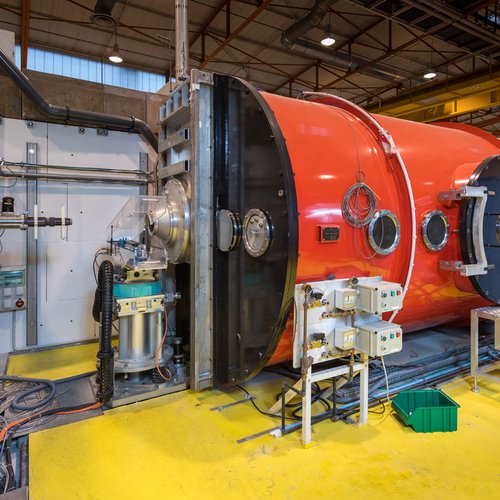
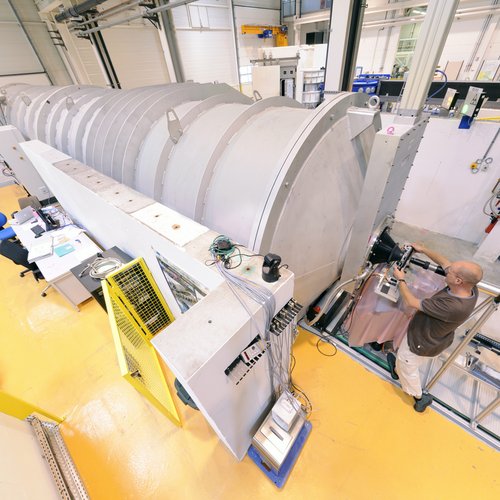
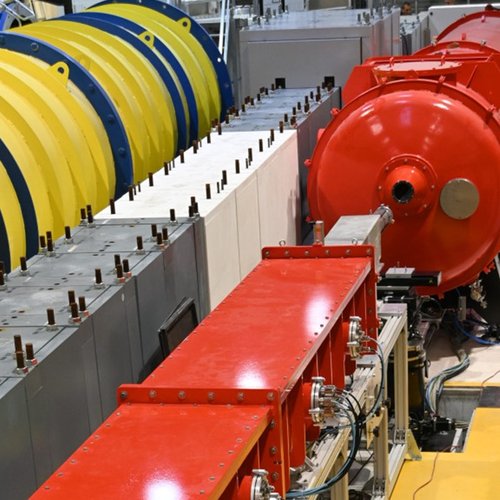
Three ILL-operated SANS instruments (D11D22 and D33) complemented by the French CRG SAM are used for the determination of nano to microscopic structures on the lengthscale from 1 nanometre to about 1 micron. D16 can also be used for SANS. The instruments are optimized for different kinds of scientific studies, for example soft matter on D11, biology on D22 and magnetism on D33. Contrast variation based on isotopic substitution (normally hydrogen → deuterium) is widely used in soft matter and biology studies – support can be provided for deuteration.

D11 (since 1972) serves a variety of scientific fields from soft matter, to biology, to condensed matter physics The instrument, which has always been intensely used for soft matter and biological research, is constantly being improved for the field of soft condensed matter and offers a wide variety of possible sample environments. The low q option of the 75 m instrument is unique (large detector – long detector & collimation distances – long wavelengths). By using the longest sample-detector distance of 39 m D11 can access low q at short wavelength, avoiding problems of multiple scattering when using long wavelengths. The q-range covered by D11 so far is spanning over the classical SANS q-range plus the V-SANS q-range.

D22 (since 1994) is the highest flux SANS instrument in the world and still the reference for new developments. Its two detectors allow to cover a broad q-range at once for kinetics. Its high flux is allowing the development of microfluidics and small sample volume measurements. The new options on D22 with white beam and increased wavelength spread (by tilting the selector) give more flux that benefit fast kinetic studies like stopped flow, time resolved rheology, TISANE, to cite some.

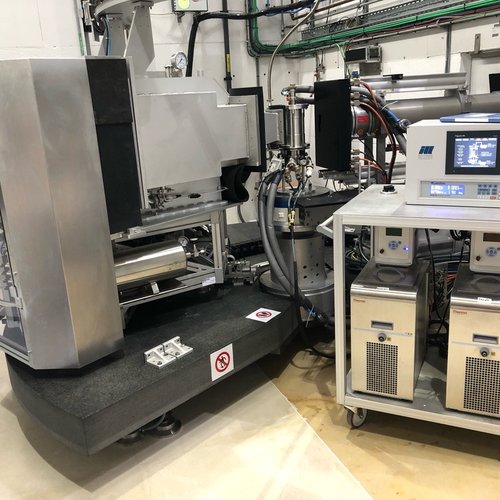
D33 (since 2012) is a very tunable instrument combining most of the possible options for SANS: conventional SANS mode with monochromatic beam by using a velocity selector; TOF mode allowing an enhanced dynamic q-range and flexible wavelength resolution; TOF-GISANS (no need to vary the incident angle, favourable e.g. for aligned magnetic systems); polarized neutrons and 3He spin analysis; large sample area allowing the installation of bulky or very high field sample environments. 

An overview of instrument parameters is provided in the table below to help you choose the most suitable instrument. By clicking on the instrument, you can go directly to the dedicated instrument pages where more information can be found, including scientific highlights and contact details for the instrument scientists.

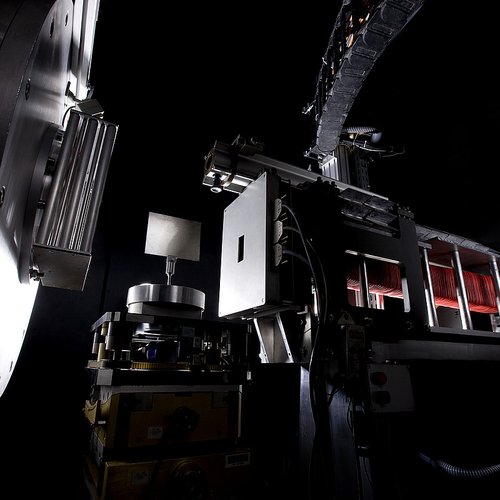
Two complementary public reflectometers are world leading instruments for the study of thin films at interfaces (0.5-500 nm normal to the surface and 1-50 micron in-plane length-scales) with so far unbeaten performances and some unique features.

D17 (since 2000 as a devoted reflectometer) has a vertical sample geometry, can work both in TOF and monochromatic modes and has the option of polarisation analysis. It has the widest accessible q-range for a TOF machine (0.002-2Å-1) and is able to provide useful data in optimised conditions with measuring times down to 120 ms. The science performed covers three main areas: Soft Matter (55%), Biology (30%), Magnetism (12%) and applied materials science. A recently hired scientist is developing the instrument for polarised neutron reflectometry. The TOF-PNR option is finally ready. Time-resolved NR on D17 will become more frequent in future because only D17 covers two essential prerequisites: high flux and low background and broad wavelength range.  D17 competitors include INTER and POLREF at ISIS, N-Rex at FRMII and SuperAdam, mainly for the PNR option.

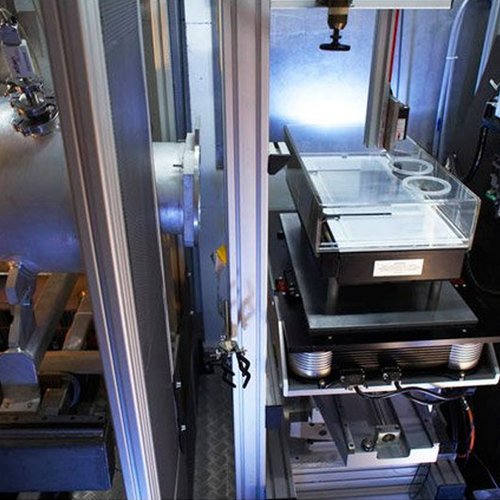
FIGARO (since 2009), a TOF reflectometer with similar performances in terms of flux as D17 but with a horizontal sample geometry, specializes on scientific problems in soft matter, chemistry, physics and biology and free and confined liquid interfaces.  Domains of interest include biophysics (DNA/lipid interactions), environment (global warming), health (pollution and nanotoxicology) and formulations (polymer/surfactant mixtures).  Plenty of publicity has been generated recently to this effect. Sole existing competitor is INTER (ISIS) for the study of free liquid interfaces. Nevertheless, FIGARO was used as the benchmark instrument during the STAP meetings for reflectometry at the ESS as it is considered to be world leading due to its power, versatility, unique features and healthy publication record for such a young instrument. FIGARO is powerful and unique: (1) flexibility to tune flux vs resolution, (2) high flux on a reactor source optimized for kinetic measurements and (3) a reflection down time-of-flight option. This last feature is showing very powerful in the recent developments for liquid/liquid interfaces and surface rheology. 

SuperADAM, a monochromatic reflectometer with vertical sample geometry and polarization option, is a CRG instrument devoted primarily to Swedish use. It has been recently fully rebuilt and moved to the H52 guide. In addition to the facility itself the Super ADAM project hosts a number of educational efforts, training and outreaching activities that are aimed to promote the existing and encourage new methods of neutron research within the Swedish research community. Since July 1st 2013 it is fully operated by Uppsala University and the CRG contract is signed until mid 2016. Super ADAM has a large variety of incident beam optics including two monochromators, large experimental area and modular design which allows flexibility currently unrivaled by other instruments of this type. Through its high resolution and polarization it excels in reflectivity measurements on magnetic thin films and multilayers. However a low resolution and high flux option for soft matter studies is foreseen and is under development (to be tested in 2015).

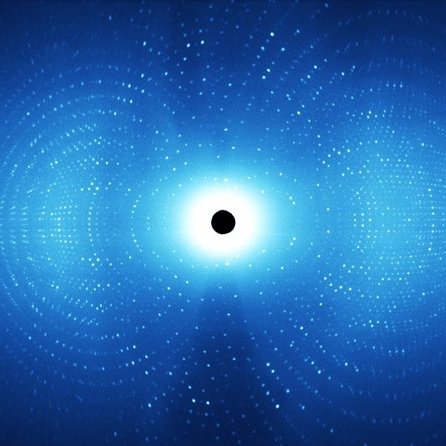
The quasi-Laue diffractometer LADI-III is used for single crystal neutron diffraction studies at high resolution (1.5 – 2.5 Å) of biological macromolecules, such as proteins or nucleic acids, providing unique information regarding hydrogen that is complementary to X-ray crystallography. Locating the positions of hydrogen/deuterium (H/D) atoms and protons/deuterons (H+/D+), reveals important information on protonation, H-bonding and hydration. These details allow a more complete understanding of a macromolecule’s specific function, such as reaction pathways of enzymes, and can assist in structure-guided drug-design. Due to the low flux of even the most intense neutron sources, neutron macromolecular crystallography has historically been an intensity limited technique, requiring very large crystal volumes and long acquisition times. However, over the years, LADI-III has gone through a number of upgrades that have dramatically reduced both the crystal volumes required and the data collection times. This has placed LADI-III's performance in a world-leading position, despite the more recent appearance of instruments at other neutron facilities, such as BioDiff at FRM-II, MaNDi at SNS and iBIX at J-Parc. The smallest crystals used, largest systems studied and fastest data collections have all been achieved using LADI-III. Currently, LADI-III utilizes a multilayer bandpass filter for wavelength selection. The replacement of the multilayer bandpass filter with a neutron velocity selector is a planned upgrade for LADI-III in 2026 that will increase the neutron transmission by a factor of ~2. This will allow smaller crystals to be used or faster data collection times, as well as providing more flexibility (in terms of wavelength bandwidth choice) to further optimize data collection strategies.

To extend the capabilities and capacity for neutron macromolecular crystallography experiments at ILL, a second quasi-Laue diffractometer DALI has been commissioned at H141 as part of the ILL Endurance Programme. DALI utilizes a neutron velocity selector to provide both higher transmission and a narrower bandwidth (δλ/λ ~10%) than LADI-III, required to extend capabilities to studies of larger, more complex systems. In October 2025, a completely new neutron-sensitive cylindrical image plate detector was built and installed on DALI and neutron diffraction tests and analyses were performed using crystals of proteins covering a wide range of molecular weights, from the very small (6 kDa) to the very large (271 kDa). The results show that the LADI-III and DALI quasi-Laue diffractometers are highly complementary; LADI-III delivers higher quality diffraction data for small to medium-sized proteins (5-70 kDa) and DALI, with its new detector and narrow bandwidth velocity selector, now delivers diffraction data of higher quality for large proteins (70-150 kDa). In addition, the tests indicate that DALI can even be used to study very large proteins (>150 kDa) that were previously out of range. This represents a step change in capabilities for neutron macromolecular crystallography research and further cements the ILL’s position as world-leading in the field.

D16 (since 1976) is a versatile small momentum transfer diffractometer (q range 0.01-2.5 Å-1) with high Dq resolution (Dl/l=0.01) for the study of a wide range of partially ordered structures in biology, soft condensed matter and material science. D16 has been upgraded in 1999, moved once in 2007 and again in its final position on H52 in 2013-2014, where it enjoys now a dedicated design matching its geometry and intensity needs. It benefits from a high efficiency high resolution large area detector, MILAND, once more unique in its kind. The instrument is particularly well suited for high resolution studies of diffracting material with repeat spacings of the order of few tens of nanometer. Main applications involve biomembranes systems, molecular liquids, mesoporous materials and clays, magnetic materials. It is also possible to perform low resolution cristallography experiments on crystals of very large unit cells (viruses, lipoproteins, ...).  Preliminary tests done at the end of last cycle showed a gain of a factor x10 in flux in the new position. The instrument characteristics are unique worldwide, the only similar instrument being AND/R at NIST, very successfully used for the diffraction of biomembranes but accessing a lower q range (and obviously lower flux).

Recent science highlights