This website is being migrated. In case you don't find the information you are looking for, the old website can be found here. Thank you for reporting any anomalies to communication@ill.eu.

Nuclear & Particle Physics

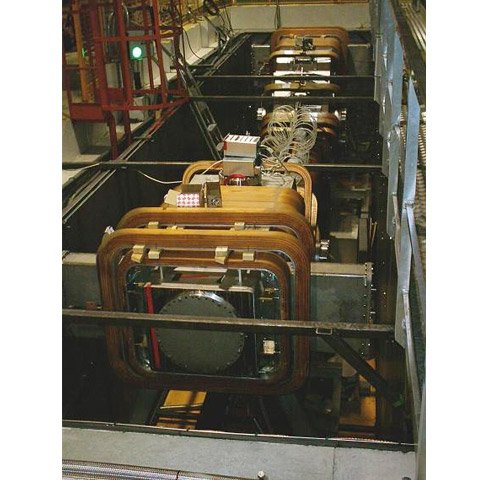
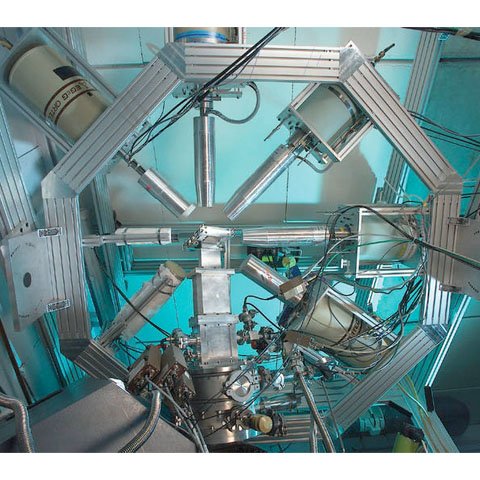
The Nuclear and Particle Physics (NPP) group operates several instruments/facilities scheduled in the user program: two instruments (PN1 - fission spectrometer "LOHENGRIN" and  "FIPPS"- gamma-ray spectrometer) deal mainly with nuclear physics and applied nuclear physics aspects. Three other ones (PF1 - intense cold neutron beam facility, PF2 and SuperSUN - ultracold neutron facility) are covering mainly neutron particle physics aspects.

Additionally, the group has the responsibility of the thermal neutron interferometer (S18), operated as a CRG instrument, and of the RICOCHET collaboration instrument, installed at the ILL.

The film was displayed at the American Physical Society conference in March 2017.

NPP Instruments

PF2_titlepage.jpg
PF2 Nuclear & Particle Physics

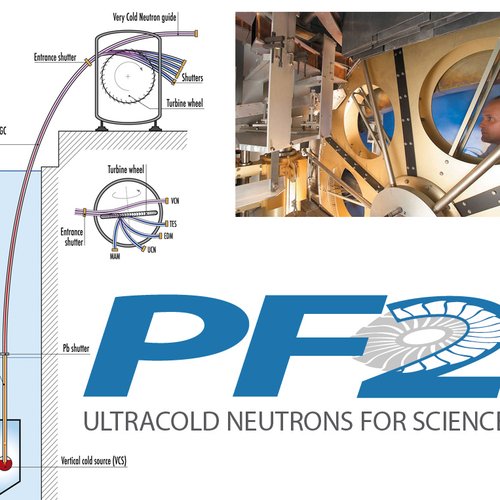
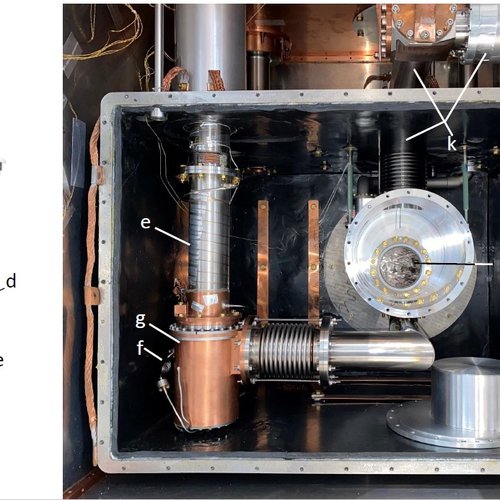
The ultracold neutron facility PF2 was built by TU Munich in collaboration with ILL. It provides a density of 50 cm^-3 of ultracold neutrons (UCN) with speeds less than 6 m/s. UCN are produced at the top end of a vertical guide where neutrons with speeds of 50 m/s are converted by the so-called Steyerl turbine into UCN. The UCN are then led by horizontal guides to several experiments in parallel. There is also an output for very cold neutrons (VCN) with a wavelength of 100Å. The fact that neutron are electrically neutral makes it possible to store UCN in traps. The majority of the measurements carried out at PF2 use this feature.

Recent science highlights

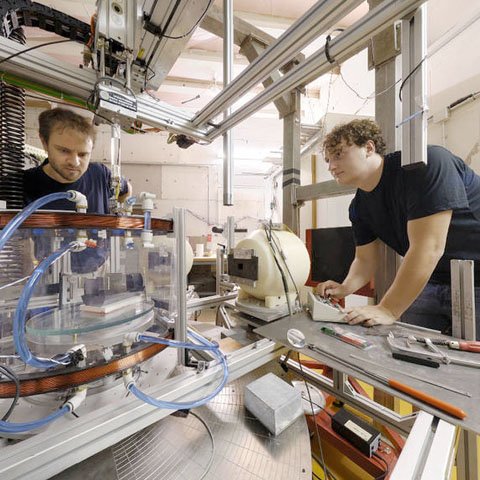
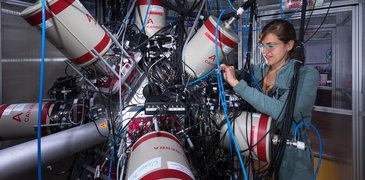
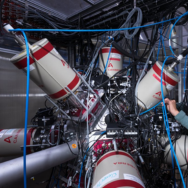
FIPPS_2019 10 21 256788_DSC2375.jpg
July 3, 2025 Exotic insights, unified aims
More than a century after the discovery of the atomic nucleus, no universal model can yet reliably predict its properties as the numbers of protons and neutrons change. Exotic nuclei – highly unstable and complex systems with unique properties – challenge and extend current nuclear theory. An additional piece of the puzzle was recently provided from the combination of experimental results from two leading international facilities and advanced theoretical calculations.