
Environmental monitoring
ILL operates a laboratory for monitoring radioactivity in the environment. This laboratory is approved by the French nuclear safety authority and is part of the French environmental radioactivity monitoring network run by the ASNR. The results of the measurements are published via this site.
What exactly do we monitor?
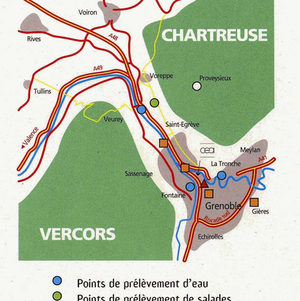
Our laboratory monitors radioactivity in all sectors of the environment. This involves taking some 1500 samples a year, resulting in 5000 separate analyses.
- First of all, water of all types is monitored by our laboratory: rainwater, groundwater, river water (from the Drac and the Isère), as are all the site’s non-radioactive water outlets: storm water, waste water, cooling water.
- The air doesn’t escape our attention either: ambient radioactivity levels are monitored and air samples are analysed for the presence of tritium, radioactive aerosols and iodine.
- Our monitoring activities also concern terrestrial bioindicators, such as cow's milk, grass and certain agricultural produce (lettuce and maize), and aquatic bioindicators, such as fish and reeds. Finally, samples taken from soil and riverbed sediments are also analysed in order to monitor for radioactivity. There is a great deal at stake, since the aim is to ensure that ILL’s activities have no radiological impact on the food chain in Grenoble and the surrounding area.
Two types of monitoring are carried out
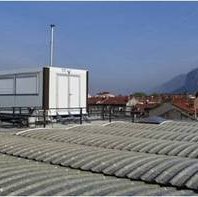
- Continuous monitoring, using stations located at various points across the urban area:
- two in the north: near the tip of the Presqu'île scientifque, and further north-west at La Rollandière;
- two in the south: on the roof of the Chorier-Berriat swimming pool, and at Le Mûrier, above St Martin d’Hères.
- Offline monitoring, based on samples taken regularly and then analysed in the laboratory. The frequency of these samples is set by regulations; it may be annual, as with maize, or much more frequent, as with water.