
This website is being migrated. In case you don't find the information you are looking for, the old website can be found here. Thank you for reporting any anomalies to communication@ill.eu.

ILL facilities overview

Facility large

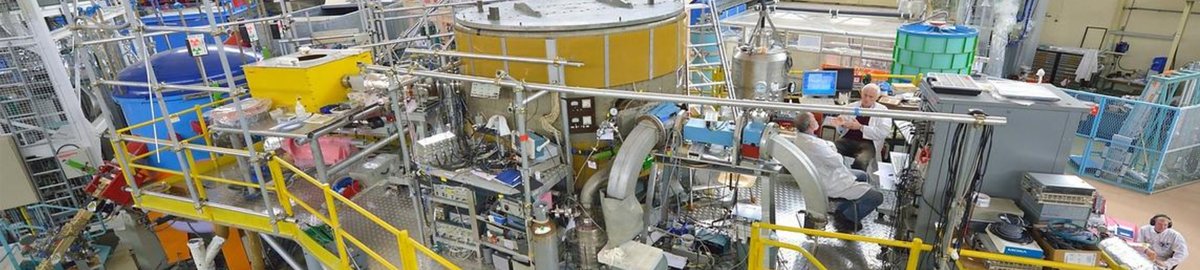
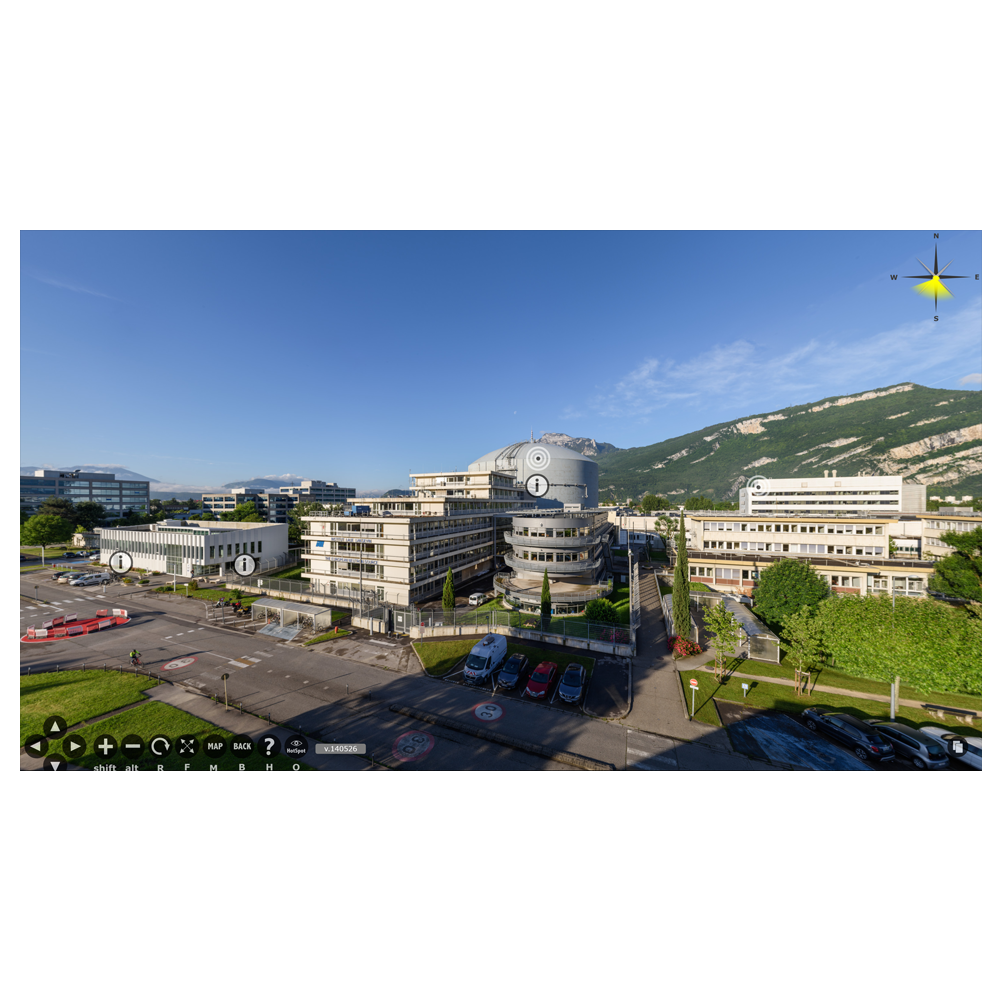
Under its dome, the ILL operates the High-Flux Reactor (HFR), a research reactor that delivers the world's most intense continuous neutron beams to a suite of over 40 state-of-the-art neutron instruments. The ILL also offers its scientific users an unparalleled set of support labs and scientific and technical services. The ILL's facilities enable research to be conducted across a wide range of scientific disciplines, providing the scientific community with advanced tools to study material structures, molecular dynamics, and magnetic properties.

The secret behind the ILL's modern and highly optimised infrastructure is the constant upgrade of its facilities and instruments. Through continuous investment in scientific infrastructures, instruments, support labs and services, the ILL has reached its highest performance level ever.

White square 50
ILL Hall
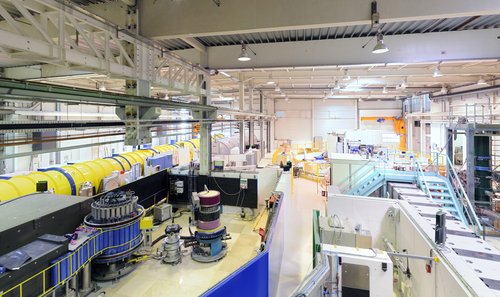
Experimental Hall ©Thion-Ecliptique

The ILL's suite of over 40 instruments is located in the reactor building (ILL5) and in the neutron guide halls (ILL7 and ILL22). The instruments are organised in groups according to the techniques they use. The user support infrastructure includes laboratories and technical facilities dedicated to advanced neutron sample environments, as well as to biology, chemistry, deuteration and soft matter.

Besides the user support facilities, ILL's installations include laboratories and technical facilities for research and development (R&D) in a comprehensive set of neutron technologies, in which the ILL is world leader.

Click HERE to enlarge the picture and HERE for a detailed map of the ILL instrument suite.

White square 50
Page
Techniques
The following pages describe the evolution of techniques at the ILL. Many of the latter were initiated at the ILL but testimonials, photos or documents are often rare, at least for the first 30 years of the ILL. Understanding how we arrived at current techniques is instructive and it is us…
Page
Neutron detection
Neutrons detection at the ILLA draft history of neutron detection at the ILL is available here in French.Its content has not yet been validated and cannot be considered exact. If you wish to use or quote documents or information found there, it is important that you first check their valid…
Page
Central computer and Instrument control
Web version and illustrations by Alain Filhol, December 2022 1972-2008 - Computing, Control, and Data treatment at the ILL I wished to conserve my mem…
Page
ILL facilities overview
Under its dome, the ILL operates the High-Flux Reactor (HFR), a research reactor that delivers the world's most intense continuous neutron beams to a suite of over 40 state-of-the-art neutron instruments. The ILL also offers its scientific users an unparalleled set of support labs and scie…
Page
Reactor overview
ContactEmail: reacteur@ill.eu Under its dome, the ILL operates the world’s most intense continuous neutron source: the High-Flux Reactor (HFR, known officially as Installation Nucléaire de Base n° 67), a nuclear research reactor designed to provide very intense neutron beams. The reactor o…
Page
Reactor cycles
Reactor startups and shutdowns take place at 8.30 a.m., except on Mondays when they take place at 11.30 a.m. 2026 …
Page
Millennium programme
In 2000, the ILL launched the Millennium Programme designed to establish a sustainable strategy for the continual improvement of its infrastructure and instruments. Founded on new scientific opportunities, as well as exciting developments in instrument design – detectors, monochromators – …
Page
Sample environment
1970-1990, sample environments at the ILLby Alain Filhol and Eddy Lelièvre-BernaThe ILL owes its undoubted success to a conjunction of favourable factors. First and foremost of course, the ILL high-flux reactor, unique in its field and unrivalled since 1972; then the prolific use of guides…
Page
Fertile ground
Intro Cryogenics Key points Grenoble, fertile groundIn his book "Des neutrons pour la science" ("Neutrons for Science") Bernard Jacrot notes that the ILL in 1965 was already on very fertile ground as regards setting up a highly effective cryogenics service [1].The CNRS had a lot of experience throu…
Page
Commercial cryostats
Intro Cryogenics Key points It was ILL's initial policy to buy the cryostats commercially available [1]. The directors had seen or used them in the past and thought they would do the job. As we shall see, this was far from the case, and cryostat design made major progress thanks to the …
Page
Orange cryostats
Intro Cryogenics Anti-Dewar Key points The Orange CryostatAn achievement whose impact on the scientific life at the ILL has been, and still is huge. The context in the early seventiesAs a whole series of early letters and reports attest, cryogenics was a crucial issue for the ILL …
Page
Cryocoolers
Intro Cryogenics Key points Unlike cryostats based on the boiling of liquid helium, cryocoolers are based on the cyclic compression and expansion of helium gas (closed-cycle cryostat). They are interchangeably referred to as:CryocoolersClosed-circuit refrigeratorsCryogen-free (dry) dilution refrige…
Page
Dilution cryostats
Intro Cryogenics Principle Key points Why a dilution cryostat?At atmospheric pressure liquid helium has a boiling point of 4.2 K (-269 °C). This can be lowered to 1.5 K by applying an underpressure above the liquid. However, to descend below 1 K, we need more complex equipment; the 3He isotope (whi…
Page
Dilution inserts
Intro Cryogenics Key points Dilution insertsWith the Orange cryostats quickly proving to be both reliable and easy to use, efforts to extend their initial temperature range soon followed (1.5 K - 300 K). An increase towards the higher end of the temperature scale was achieved in 1984, with the deve…
Page
Helium flow
Intro Cryogenics The trick Key points Helium-flow cryostats <b>Cryogenics system using a jet of nitrogen gas on LI4, a single-crystal X-ray diffractometer (AED Siemens), one of the very fir…
Page
Helium recovery
Intro Cryogenics Key points The helium recoveryIn the seventies liquid nitrogen was relatively cheap (<0.5 €/litre in 2014 rates), but helium was already expensive (6-8 €). Dominique Brochier came from a "poor" low-temperature laboratory and immediately started working on a recovery system for t…
Page
Sample alignment
Intro Cryogenics Eucentric head Key points Sample alignmentWhen we attach a crystal to the end of the sample-holder stick, we pre-orient it as well as possible at ambient temperature. Once the temperature desired has been reached,the sample often has to be reoriented, to align it with the neutron b…
Page
Temperature controllers
Intro Cryogenics Key points Dagleish Temperature 
controllersPage produced with the help of Dominique Brochier, Paul Dagleish, Pierre Andant (retired staff), Eddy Lelièvre-Berna (ILL), Jacques Bossy (CNRS) and Jean-Louis Bret (retired from CNRS/CRTBT).Thermometry techniques and temperature controll…
Page
Annuals Reports
Intro Cryogenics Controllers Dagleish Key pointsWhat follows is drawn essentially from the first 12 ILL Annual Reports. The beginning of the cryogenics service1969Recruitment of Gabriel Prati, TBT technician1970Management realises the time that had been lost before deciding to constitute a sample e…
Page
High temperatures
Intro Key points High temperatures and neutronsIt was clear, very early on, that high-temperature and very high-temperature studies (>2000ºC) into the structure and dynamics of soft or solid materials would be promising veins of research for the ILL. The ability of neutrons to penetrate most met…
Page
Annual reports
Intro High temperatures Key pointswith the help of Pierre Andant.What follows is drawn essentially from the first 19 ILL Annual Reports. The text in blue is additional commentary to the annual report information.1972, 1973, 1974Not a word about furnaces.19751st mention of furnaces in the annual rep…
Page
High pressures
Intro Clamp & Cryostat Key points High pressure at ILLTo apply high isotropic pressure to a sample, the sample is immersed in a gas or liquid which is then compressed. The higher the pressure, the stronger - and therefore the thicker - must be the walls of the pressure cell. The gas or liquid i…
Page
Annual reports
Intro High pressures Clamp & Cryostat Key pointsThe 1970 to 1990 ILL Annual Reports have little to say about pressure cells.1972 or 1973 Rudolf Mossbauer creates the "Sample environment" service including cryogenics, high temperatures, high pressures, high fields which was attached to the "Inst…
Page
Clamps and cryostats
Intro High pressures Key notes Preparing high pressure and low temperature experimentsThis film shows an experiment being prepared on the D10 neutron diffractometer, in a two-axis configuration (October 2001).The pressure cell (a 10 kbar clamp) containing the sample is fixed on the end of the stick…
Page
Annual reports
Intro High magnetic fields Key pointsThe ILL Annual Reports from 1970 to 1990 only mention cryomagnets relatively late on, no doubt because the low temperatures/sample environment group was not directly in charge of the previous coils. The text in blue is additional commentary to the annual report …
Page
Contributors
Introduction Low temp. High temp. High pressures High mag. fields Testimonies and documents ? Do not hesitate to contribute to <filhol(at)ill.eu> Low temperatures(periods at the ILL)Alain Benoît -  CNRS/CRTBT physicist.Jacques Bossy (1990-1992, 1994-1997) - responsible of the IN8 spectrometer…