

This website is being migrated. In case you don't find the information you are looking for, the old website can be found here. Thank you for reporting any anomalies to communication@ill.eu.

Austria

National representative at the ILL

Austrian Academy of Science

Scientific Member Representative: Martin FALLY | University of Vienna

Scientific member country since 1990

Industrial Liaison Officer

Beamtime allocation to Austrian scientists at the ILL

Disciplines distribution in Austrian beamtime requests

Publications involving Austrian scientists and using data from the ILL

News corner

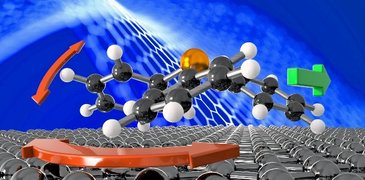
molecular_moonlander_1.jpg
April 11, 2024 A molecular moonlander: insight into molecular motion on surfaces at the nanoscale
Using neutron spectroscopy data taken at ILL, researchers achieved a novel understanding of molecular movement at the nanoscale, providing new insights that may impact the design of future materials and technologies. The study has just been published in the Nature Portfolio open access journal Communications Chemistry – and is featured (as a banner) on the journal homepage.
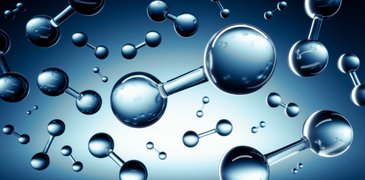
240312 HydrogenStorage.jpg
March 12, 2024 A neutron boost towards a clean energy future
The global need to transition to a sustainable and clean energy future has brought hydrogen to the forefront as a promising clean energy carrier. Efficient and safe storage is a key challenge and hydrogen storage in activated carbons is a promising option. Investigating the fundamental interactions between hydrogen and nanoporous carbon at the atomic level can provide vital information for enhancing the storage efficiency of these materials. Neutron scattering is sensitive to hydrogen, thus opening the possibility for many different insights. This paper reports on a SANS (Small-Angle Neutron Scattering) study using ILL’s highly versatile neutron diffractometer D16 to investigate hydrogen and deuterium adsorption in nanoporous activated carbon cloth as a function of (micro)pore size. These findings will contribute to a better understanding of the processes involved and will influence the design of materials for efficient hydrogen storage devices working at realistic cryogenic conditions and low pressures.