
Examples
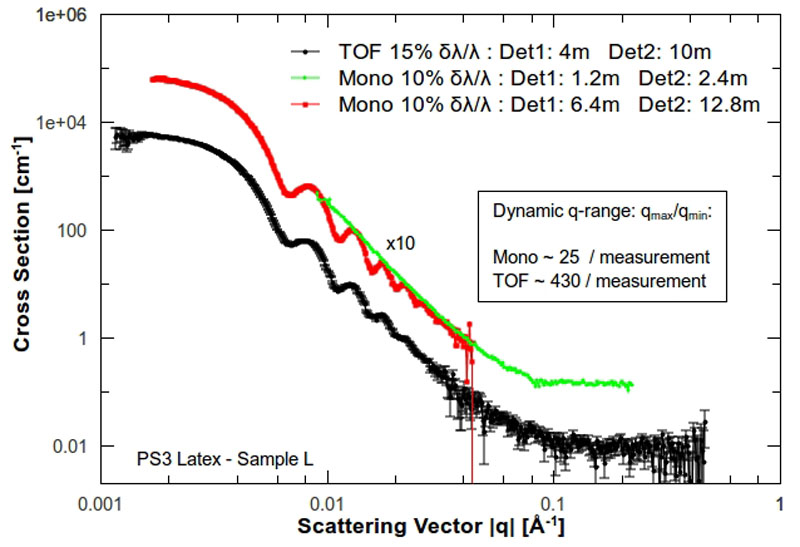
The sample is a typical latex spheres sample in D2O measured in both Monochromatic and TOF modes for the same time taken.
In monochromatic mode you need two detector configurations in order to cover the dynamic q-range accessible in TOF mode.
Monochromatic mode:
The two measurements at short and long detector distances have extremely discontinuous resolution between them but have the advantage of higher statistics in some places. Usually, you would throw away the overlapping, low resolution part of the mono data from short detector distances.
TOF mode:
It gives a massive dynamic q-range (~430 in this setting), with continuous and overall good resolution but with slightly lower statistical quality. (Rule of thumb: you don't get something for nothing).
TOF and Monochromatic modes have about the same wavelength-integrated flux for the same resolution.
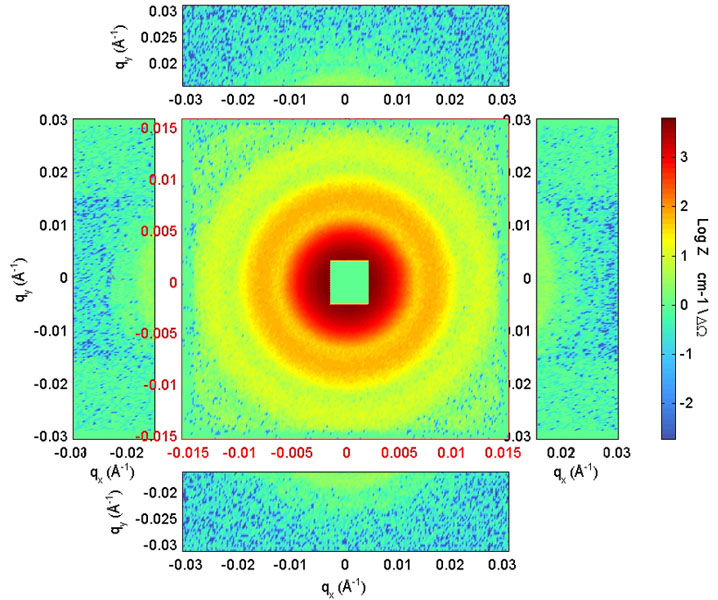
Believe it or not there was a serious point to this.
This image marks the final stage of the test period of the new instrument. The left panel of the B4C mask has a calibration mask over it to make the linearity correction to the tubes. We had to do this one by one for all panels. In the mean time, Charles made some boron letters and Isabelle made a cat!
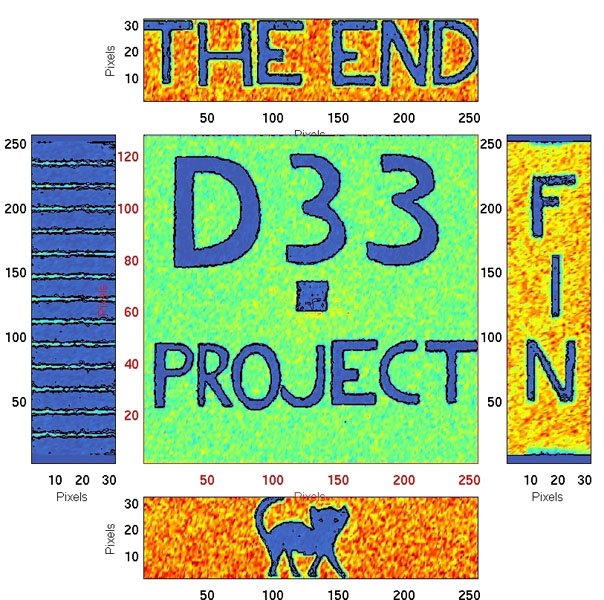
Image of a calibration mask