application/pdf •
28.4 MB

Search
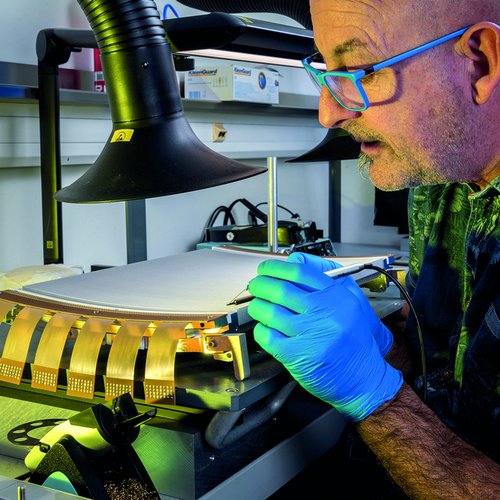
Improving neutron flux is of little value if the scattered neutrons cannot be detected efficiently with the required spatial and temporal resolution. High-quality detectors are essential for optimal instrument performance and generating top-tier science. It is critical to maximise detection efficiency while minimising background noise, such as gamma rays. In most cases, these requirements are best met by detectors using pressurised ³He gas as the detection medium.
Research and development on ³He detectors is focusing on two main techniques: Position-Sensitive Detectors (PSDs) and MWPCs. The ongoing development of both ³He and alternative detectors continues to push the boundaries of neutron detection, keeping ILL at the forefront of this field.
Bruno Guerard
Head of Service
guerard(at)ill.eu
Tel. +33 4 76 20 72 77
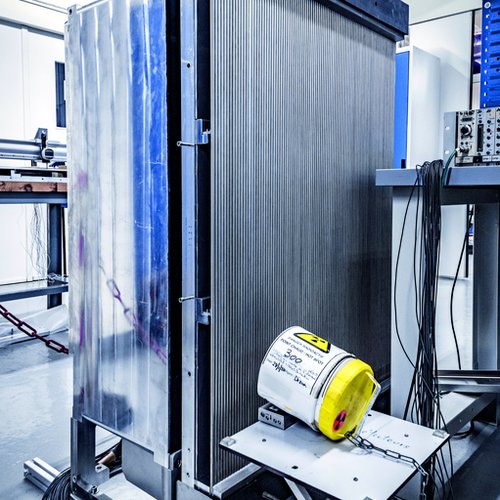
A position-sensitive detector (PSD) is a tube filled with high-pressure ³He gas, containing a resistive anode wire centrally mounted and operated at high voltage. When a neutron interacts with a ³He atom, a proton and a tritium are emitted, ionising the gas. The resulting charge is amplified, and signals are recorded at both ends of the wire, allowing the interaction position to be calculated through charge division.
A key advantage of this technique is the ability to count neutrons interacting in separate PSDs simultaneously. By assembling detectors with many PSDs side by side, counting rates can be achieved that are 1 to 2 orders of magnitude higher than those of MWPC detectors. To fully exploit their performance, precise mechanical alignment is essential, requiring accuracy within a few tenths of a millimetre.
Technical specifications (D11) :
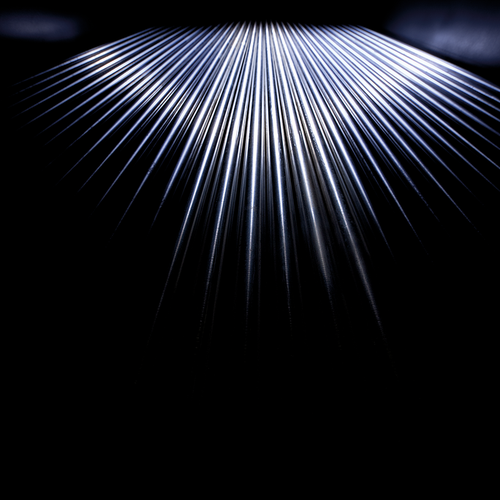
Panels of multitube detectors are similar to arrays of individual PSDs but with a different manufacturing process. In large-area multitube detectors, many stainless steel tubes (typically 32) are welded onto common flanges at both ends. These flanges are hermetically sealed with aluminium covers to contain the ³He gas, with connected tubes sharing the same gas volume.
Following the success of the IN5 multitube detector array, several other instruments have adopted this technology, including EXED at HZB and PANTHER at ILL. in 2024, ILL and ESS began a collaboration to develop a multitube detector with tubes of 2.5 cm diameter and 3.5 m in length for the CSPEC instrument.
Technical specifications (IN5) :
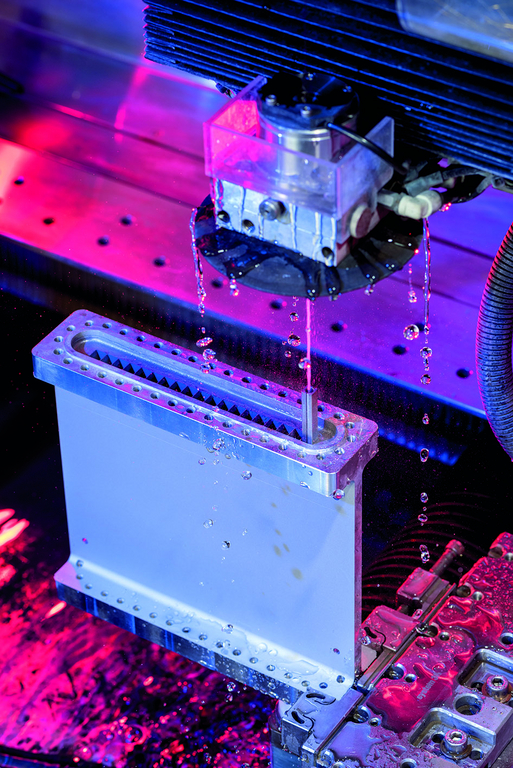
Position-sensitive detectors with a diameter smaller than 8 mm are challenging to produce. The Monoblock Aluminium Multitube (MAM) detectors address this demand for smaller diameter, providing higher spatial resolution in PSD arrays. High-precision machining at ILL has enabled the development of these detectors, which are used on the D17 and FIGARO reflectometers and the D33 SANS instrument.
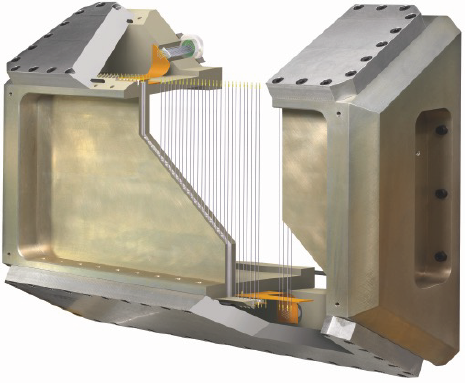
The design render shows a cross-section of the detector for the FIGARO reflectometer, highlighting the main components: the central block with the tubes, anode wires mounted in the middle of the tubes, connection circuits, and electrical feedthroughs.
Technical specifications (FIGARO):
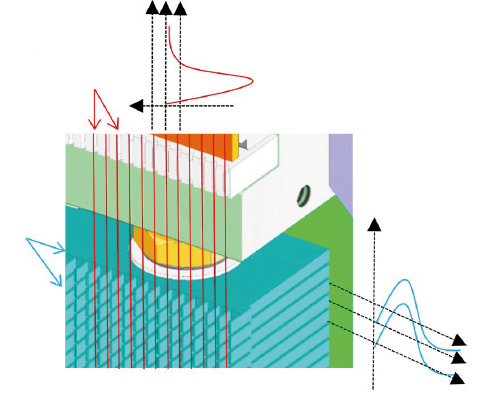
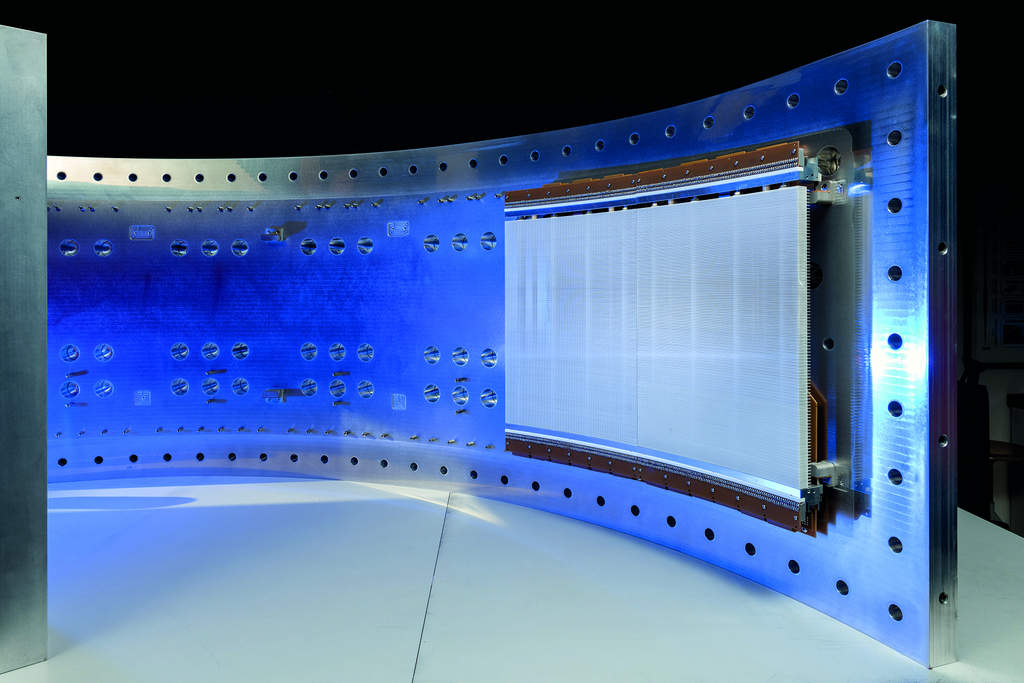
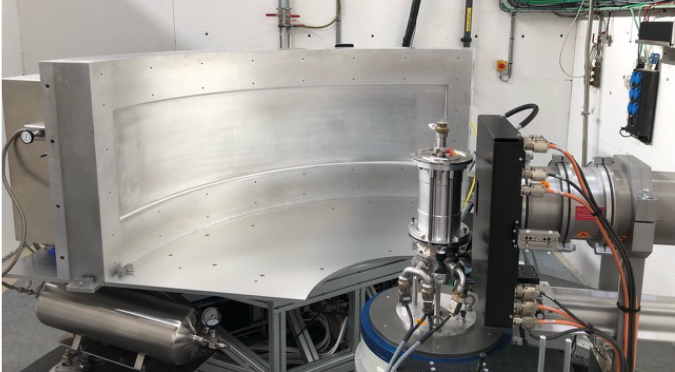
A metallic cathode was developed for curved detectors to address the issue neutron scattering caused by PCB materials often used in MWPC detectors. This new design is known as the "trench" multi-wire proportional counter (Trench-MWPC). The cathode consists of an assembly of electrically insulated metallic blades, each machined with fine teeth spaced a few millimetres apart. When the blades are stacked along the full height of the detector, the alignment of the teeth creates grooves in which the anode wires can be positioned. This configuration ensures excellent mechanical stability of the anode wires when high voltage is applied, eliminating the need for additional cathode wires above the anode plane.
As with the MAM detectors, the Trench-MWPC detectors depend heavily on in-house, precise machining of the stacked blades using wire electrical discharge machining (EDM).
Technical specifications (XtremeD)):