print

ILL at a glance

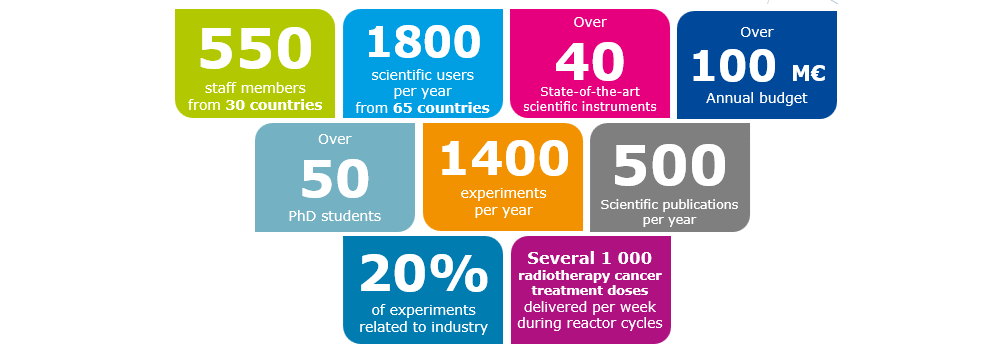
The Institut Laue-Langevin is an international research centre at the leading edge of neutron science and technology, offering researchers an exceptionally high neutron flux through around 40 state-of-the-art instruments that are constantly being developed and upgraded. As a service institute, the ILL makes its facilities and expertise available to visiting scientists. Every year, about 1400 researchers from over 40 countries visit the ILL and more than 1000 experiments selected by a scientific review committee are performed.

About 60% of the research at ILL focuses on fundamental science in fields such as condensed matter physics, chemistry, biology, nuclear physics, and materials science. The remaining 40% is dedicated to directly addressing modern societal challenges, namely in health, energy, the environment, and information technologies. For example, research is being conducted to explore how nuclear medicine can contribute to the fight against cancer, to develop new materials that can help meet tomorrow’s energy challenges. or new technologies to reduce greenhouse gas emissions.

Whilst some researchers are working on battery design, fuels and catalysts, plastics and pharmaceuticals, others are looking at biological processes at cellular and molecular level. Still others may be elucidating the physics that could contribute to the electronic devices of the future. The ILL can especially tailor its neutron beams to probe the fundamental processes that help to explain how our universe came into being, why it looks the way it does today and how it can sustain life. 

The ILL also collaborates closely and at different levels of confidentiality with the R&D departments of industrial companies. All the scientists at the ILL - chemists, physicists, biologists, crystallographers, specialists in magnetism and nuclear physics - are also experts in neutron research and technology and their combined know-how is made available to the scientific community.

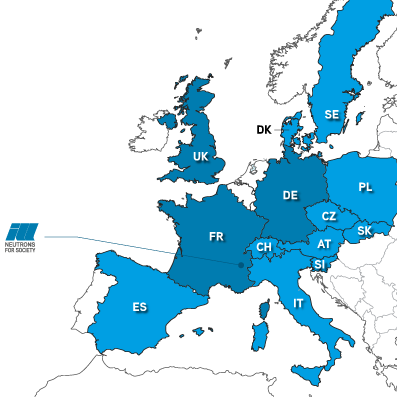
Funded and managed by France, Germany and the United Kingdom, and in scientific partnership with 10 other countries, ILL is located in the serene yet scientifically rich city of Grenoble, nestled in the foothills of the French Alps.

The institute is primarily a research facility for visiting scientists. However, a general public visitor can access the site for guided tours for specific groups, or during public events and conferences. Access is also possible through partnerships or collaborative research projects with the institute. For further details on visiting, please refer to this page.

Video : 3 minutes to discover the ILL

ILL's MISSION: NEUTRONS FOR SOCIETY

The IL's Mission is contained the tagline NEUTRONS FOR SOCIETY: to deliver excellent and impactful science, technology, innovation, and training, maximising its contribution to tackle today's great societal challenges.

As a service facility, the ILL provides the international scientific community with the brightest neutron beams in the world, a state of the art suite of instruments and support facilities, and the unique expertise of its scientists, engineers and technicians. Indeed, the ILL remains a cornerstone of the European neutron ecosystem.

FACTS and FIGURES

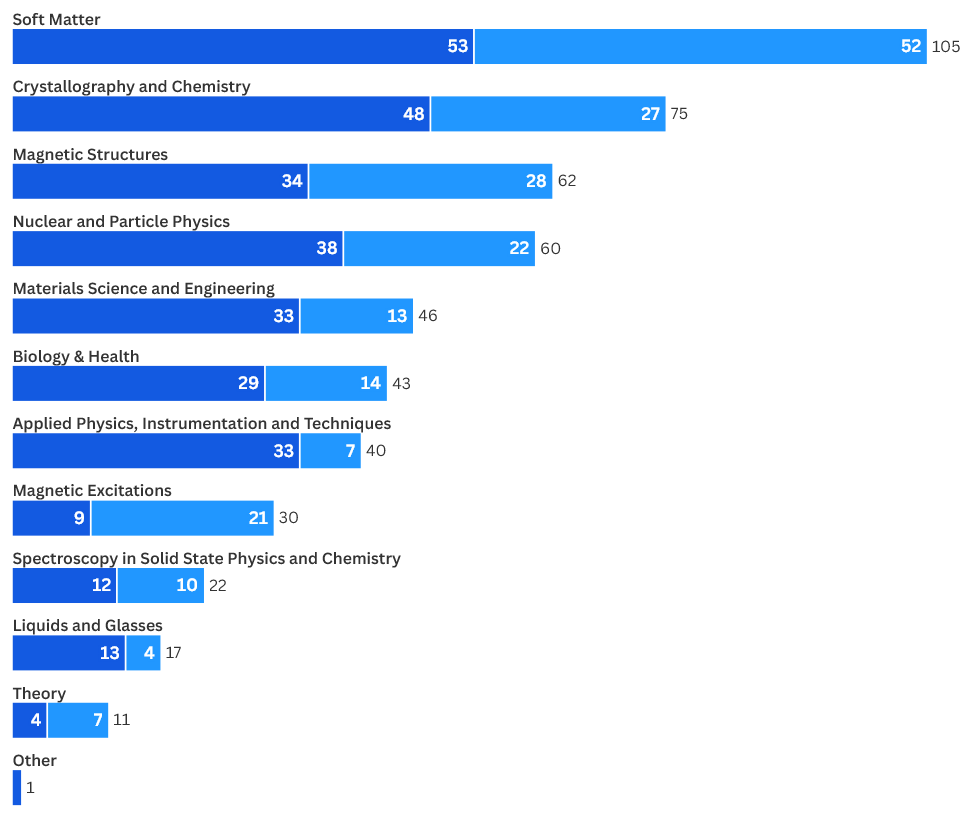
Scientific publications overview

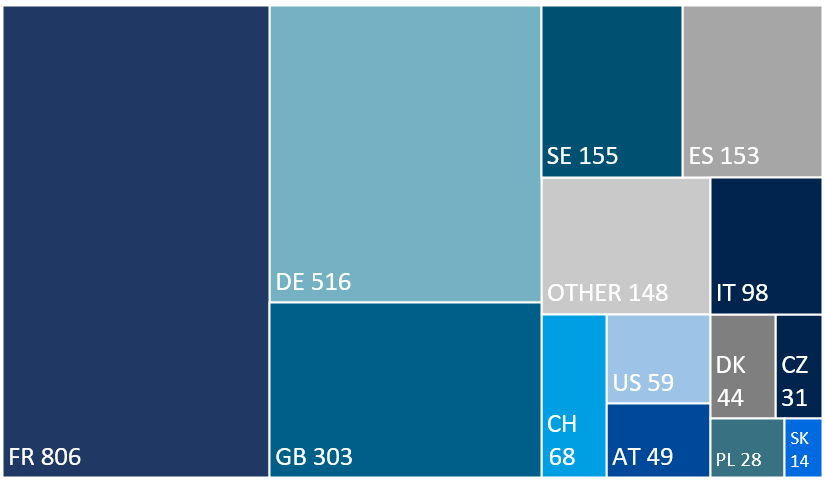
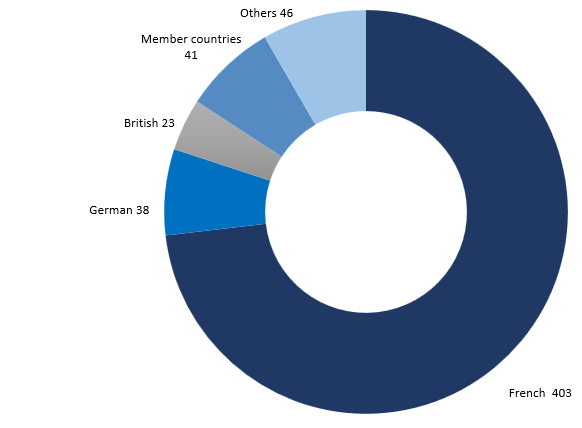
National affiliation of users in 2024 | Number of user visits

Affiliation is based on the location of the user laboratory, not on individual nationality.

523 members of staff of 25 different nationalities

Data from 31 December 2024

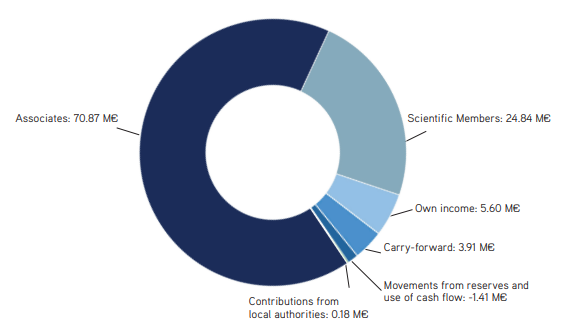
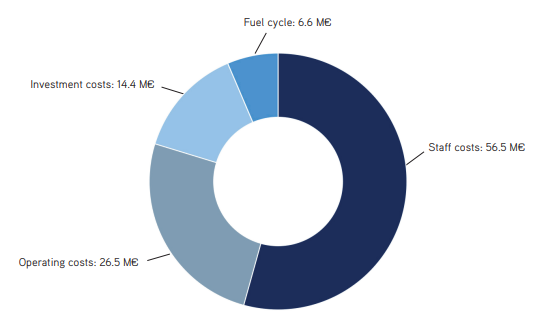
2024 budget | 105.858 M€ (excluding taxes)

Income

Expenses

A rich network

The ILL is part of many local, national, and international networks and partnerships. The facility shares the European Photon and Neutron Science (EPN) Campus in Grenoble with European Synchrotron Radiation Facility (ESRF), the European Molecular Biology Laboratory (EMBL) and the Institute for Structural Biology (IBS). Together, they constitute a hub of excellence that created partneships and collaborations such as the Partnership for Structural Biology (PSB), the Partnership for Soft Condensed Matter (PSCM) and several industrial research collaborations. In Grenoble, tuhe ILL  is also member of the GIANT network and partner of the Grenoble Alpes University (UGA).

At international level, the ILL is  a member of EIROforum, the European Intergovernmental Research Organisation forum, that brings together Europe’s largest research organisations. The ILL is also a founding member of LENS, the League of advanced European Neutron Sources