
How it works
Deformations and diffraction
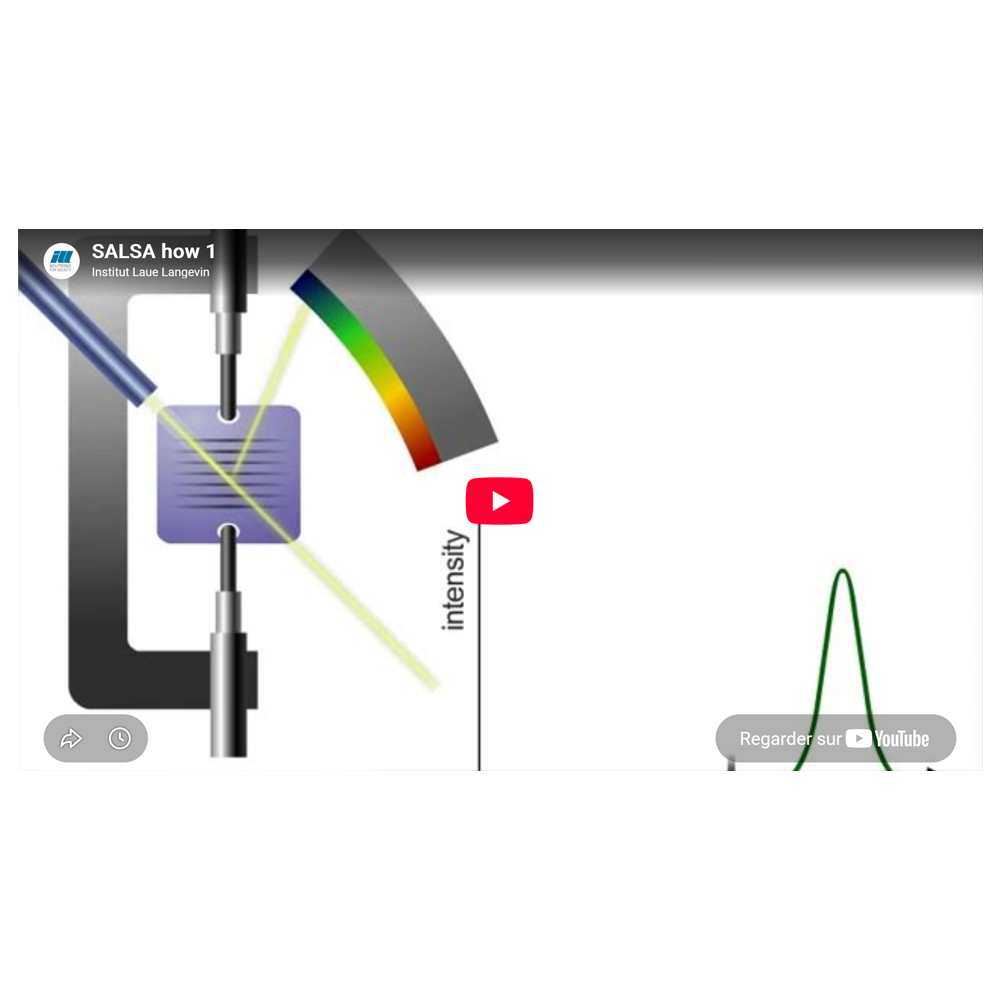
Measuring residual stress via diffraction relies on a tight correlation between macroscopic deformations (the concern of engineers) and the variation of diffraction angles (what is measured).
Deformation (compressive or tensile) changes distances between crystal planes, which translates into a modification of the corresponding diffraction angles. For a given family of atomic planes, the angle goes up for compression areas and down for tensile areas. In both cases, diffraction peaks tend to broaden because there is not a single interplane distance any longer but rather a distance distribution.
To prove this, it is enough to deform a metal sample placed in an X-ray or neutron beam.
The stress scanner
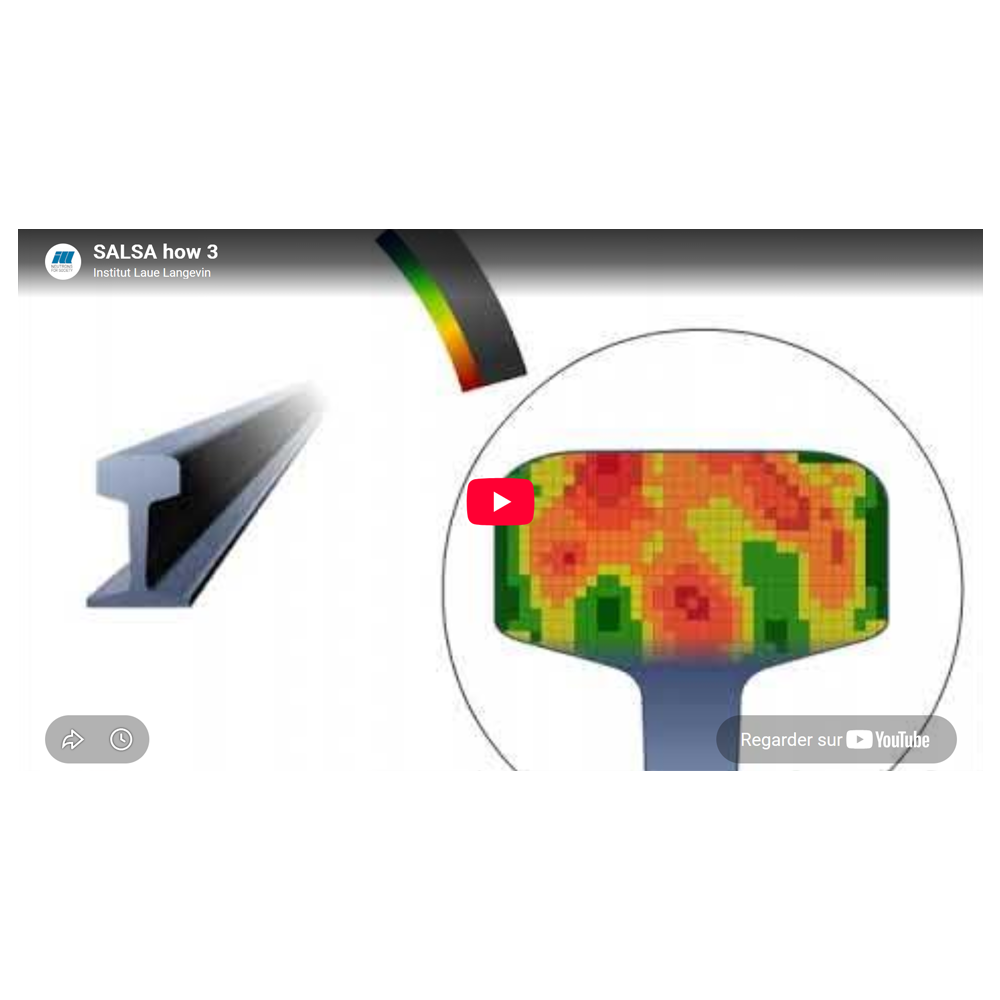
Measuring residual stress in a material amounts to making a map of its local deformations.
Just like a medical scanner makes an image of the human body interior, what is sought here is non-destructive examination able to image the internal stress repartition inside a smaller or larger manufactured object.
An advanced neutron strain analyser
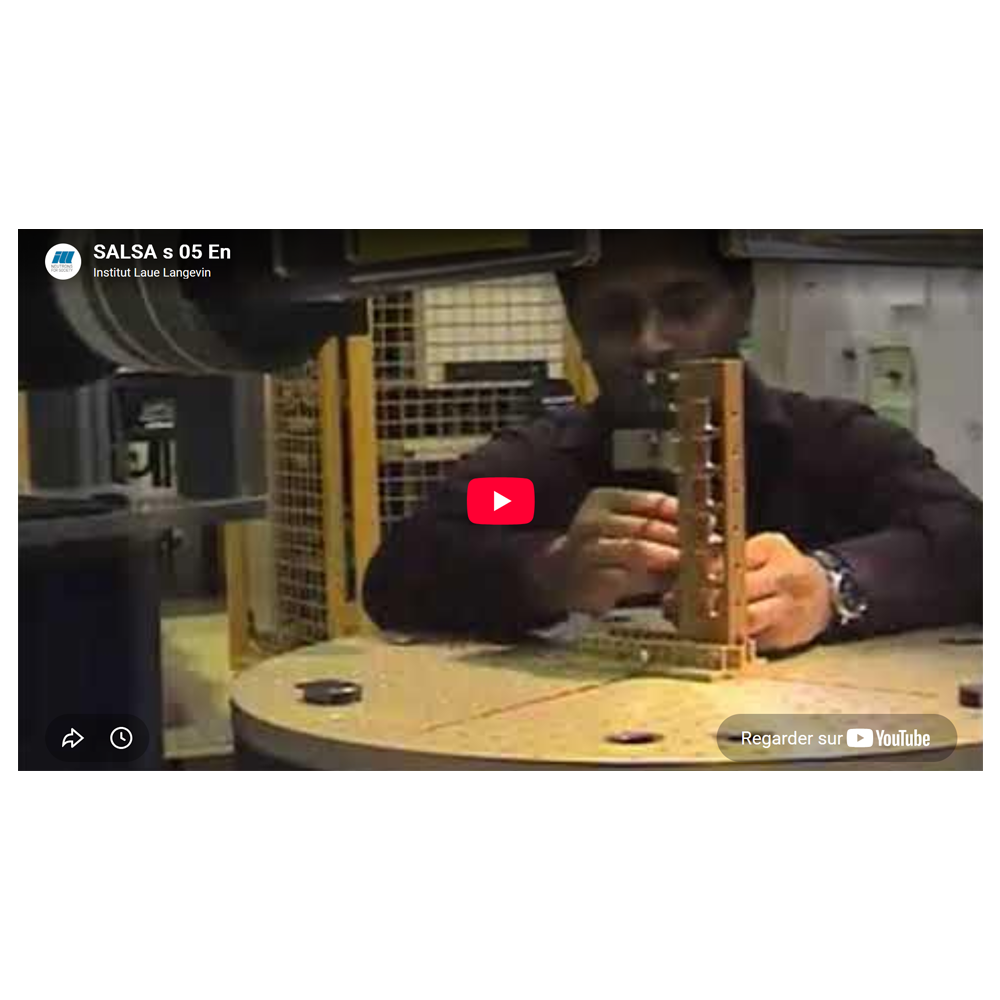
SALSA is designed for actually performing diffraction measurements on "real" engineering components and is optimised for stress determination in metallic components.
This video, recorded in 2005, demonstrates its main features and how it operates.
The benefits of having 6 legs
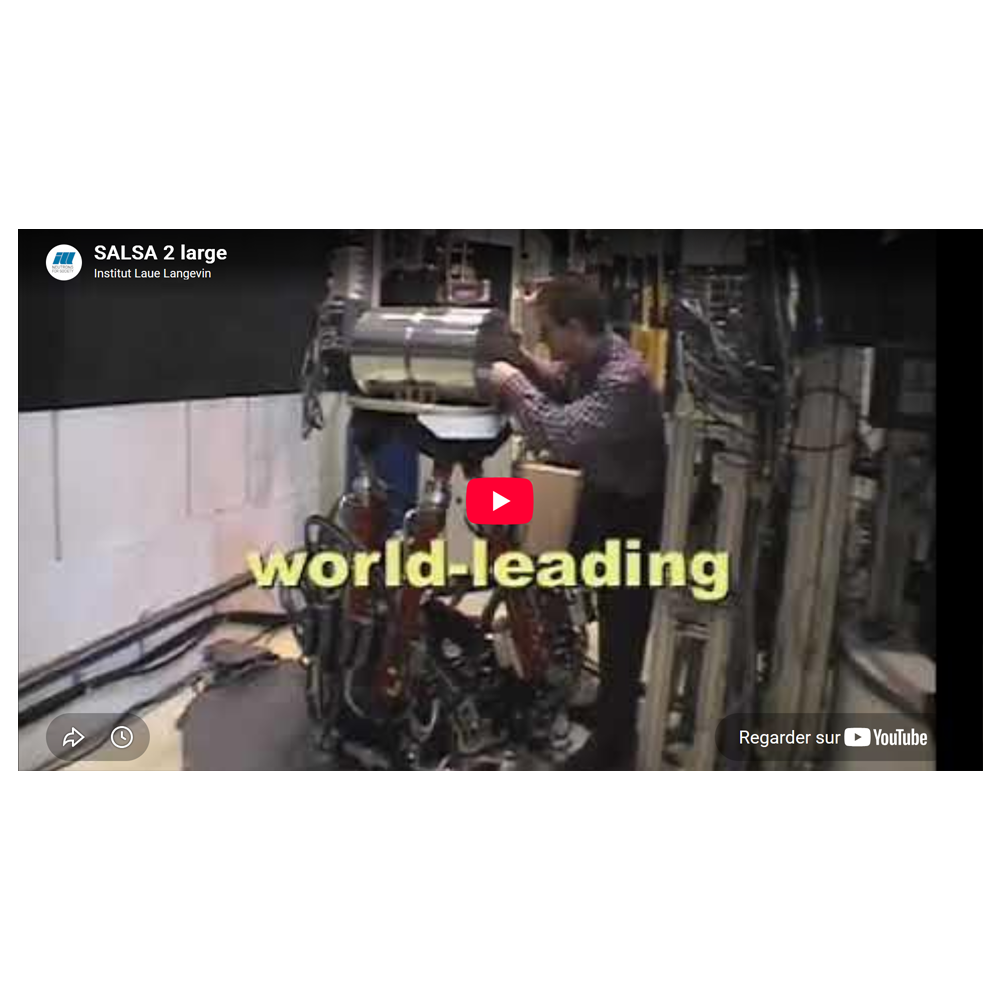
One of the principal challenges during strain experiments is the movement of the specimen about the neutron beam (gauge volume). SALSA uses a unique hexapod design which has significant advantages over traditional X,Y,Z translators. The hexapod has six independently driven hydraulic legs which can move a specimen of up to 900kg with a precision of the order of a few microns.
The video demonstrates the use of SALSA during an experiment. A 300mm diameter, 500mm long steel pipe section is maneuvered around the neutron beam for measurements of lattice strain. By measuring strain in several sample directions it is possible to calculate stress. This set of measurements would usually take many hours but the video shows the measurements at a faster speed.
Measuring residual stress
non-destructive examination able to image the internal stress repartition inside a smaller or larger manufactured object
its main features and how it operates.
the use of SALSA during an experiment