Torso da Livorno: how neutrons helped give the statue a new life while unveiling some of its mysteries
01 Sep 2026The famous Torso da Livorno is back on display at the National Archaeological Museum in Florence, after a long and complex work of restoration and research that brought it to ILL.
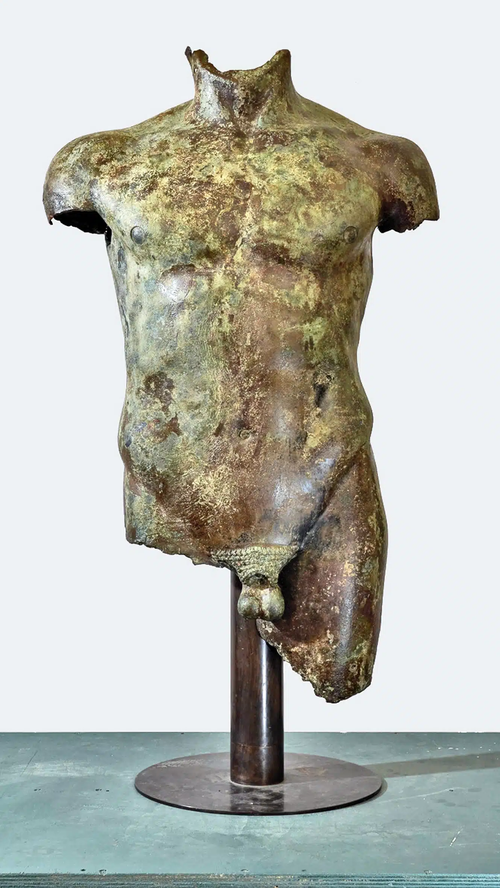
The Torso
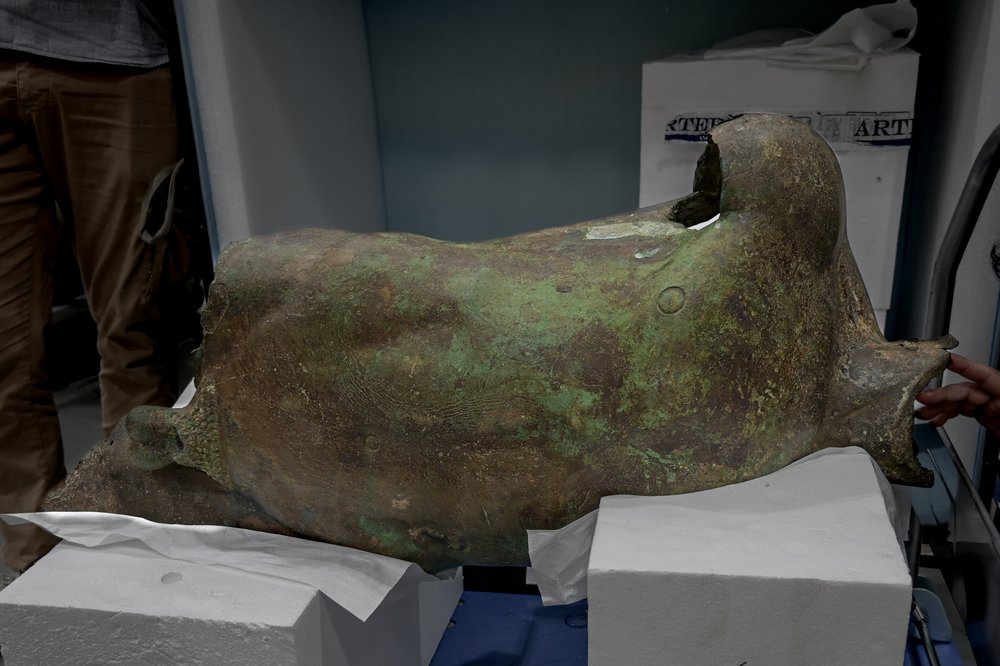
The Torso da Livorno is one of the ‘Great bronzes’ in the Medici collections. It is known to have already been part of the collections at the time of Cosimo I (1537-1574), and it has been depicted in famous paintings in the Gallerie degli Uffizi. Yet, the origins and story of this remarkable statue remain shrouded in mystery: Is it a Greek original or a Roman copy? Was it actually found on the seabed off the coast of Livorno, or has it always belonged to the grand ducal collections? And what was the actual crafting technique of such a fine anatomical and artistic piece of work?
An ambitious endeavour combining conservation and scientific research launched in 2024 represented a unique opportunity for an extensive analysis campaign based on advanced methodologies – able to support the restoration process while, at the same time, seeking to shed light on some of the open questions. This intervention has restored the stability of the artwork, while increasing its legibility – by helping us delve into its history, materials and execution technique.
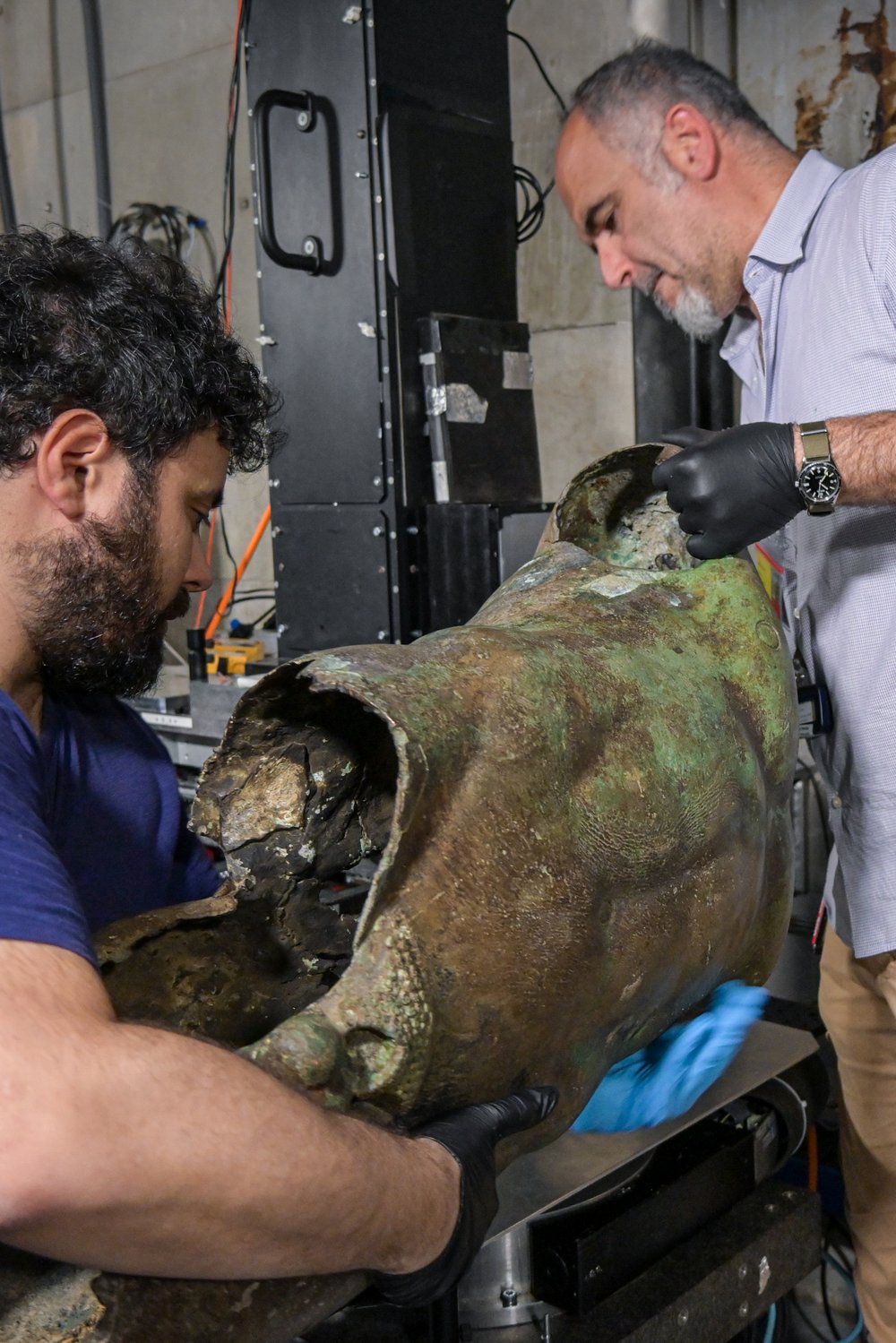
Like other bronzes in the Medici collections, the Torso was covered with thick dark surface layers known as “Lorraine patinas”, commonly applied to give a more uniform appearance or conceal repairs or discolouration. Their removal was necessary to deal with the corrosion that affected the metal. This intervention brought to light the colour variations of the metal surface and made it possible to precisely identify both marine remnant and details that provide information about the structure and fabrication.
One of the conclusions that emerges with certainty from these studies is the long period spent on the seabed, a factor that has profoundly shaped the artefact’s history. The restoration process, dating and origin of the bronze will be the focus of a one-day symposium on 17 September in Florence. After spending the summer at the National Archaeological Museum of Florence, the Torso will become part of the major exhibition "Broken. Il potere del frammento" at Palazzo Strozzi from 𝟐𝟓 September 𝟐𝟎𝟐𝟔 to 24 January 2027. Subsequently, the sculpture will come back home to the Museum to take its place of honour in the permanent exhibition of the collection.
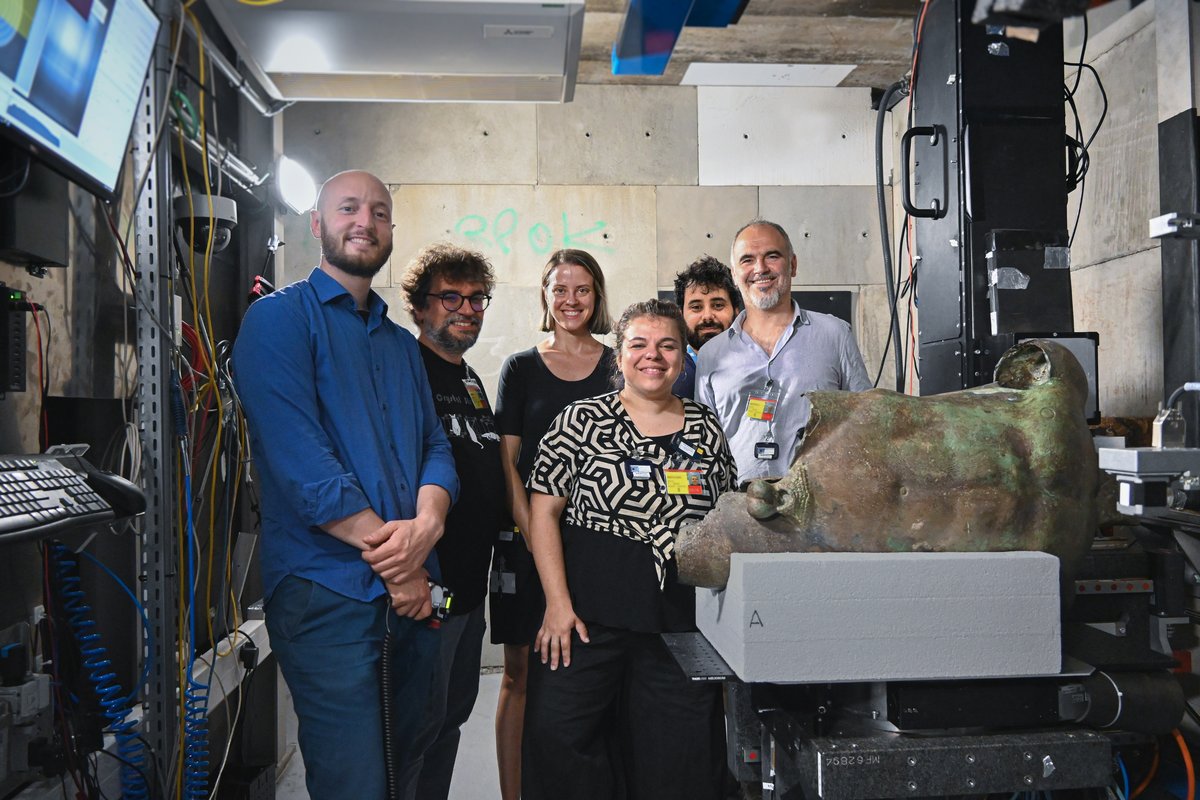
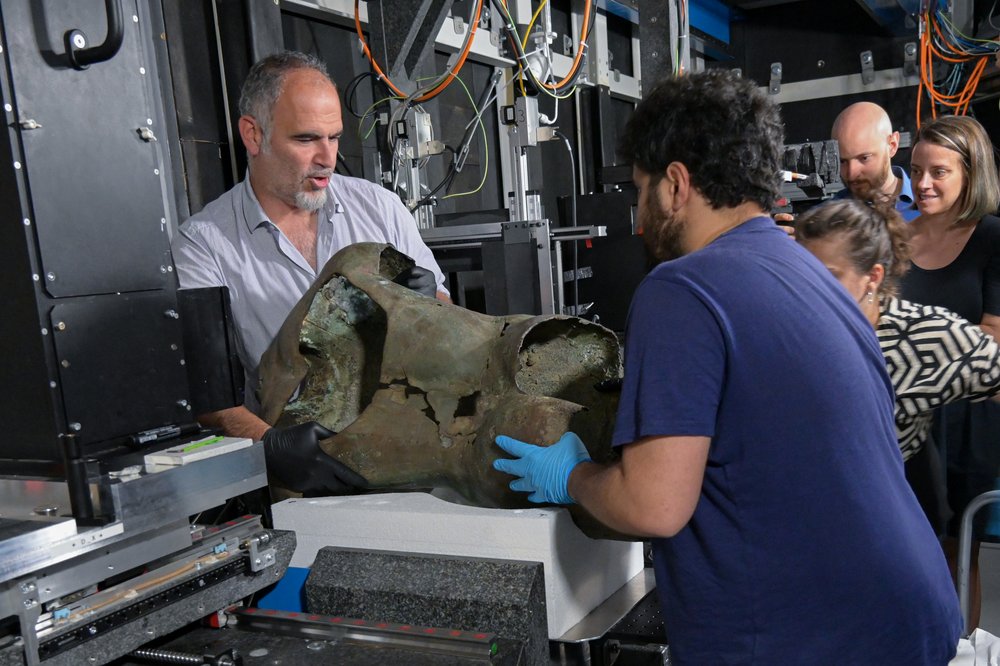
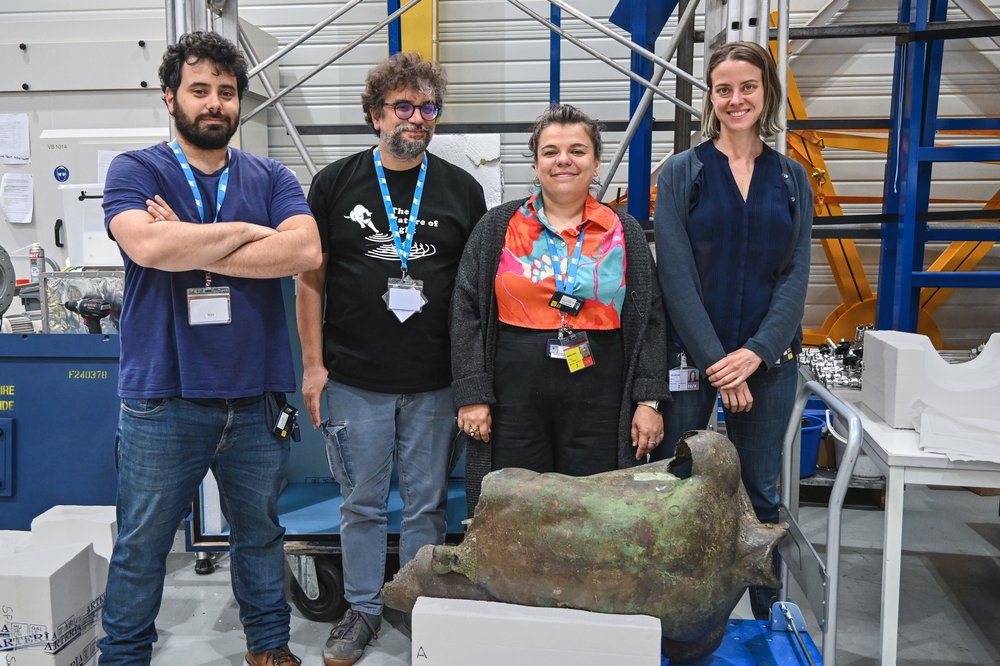
The project team at the ILL instrument NeXT. From left to right: Alessandro Tengatini, Francesco Grazzi , Anna Fedrigo, Giulia Basilissi, Francesco Cantini and Nicola Salvioli.
The role of neutrons
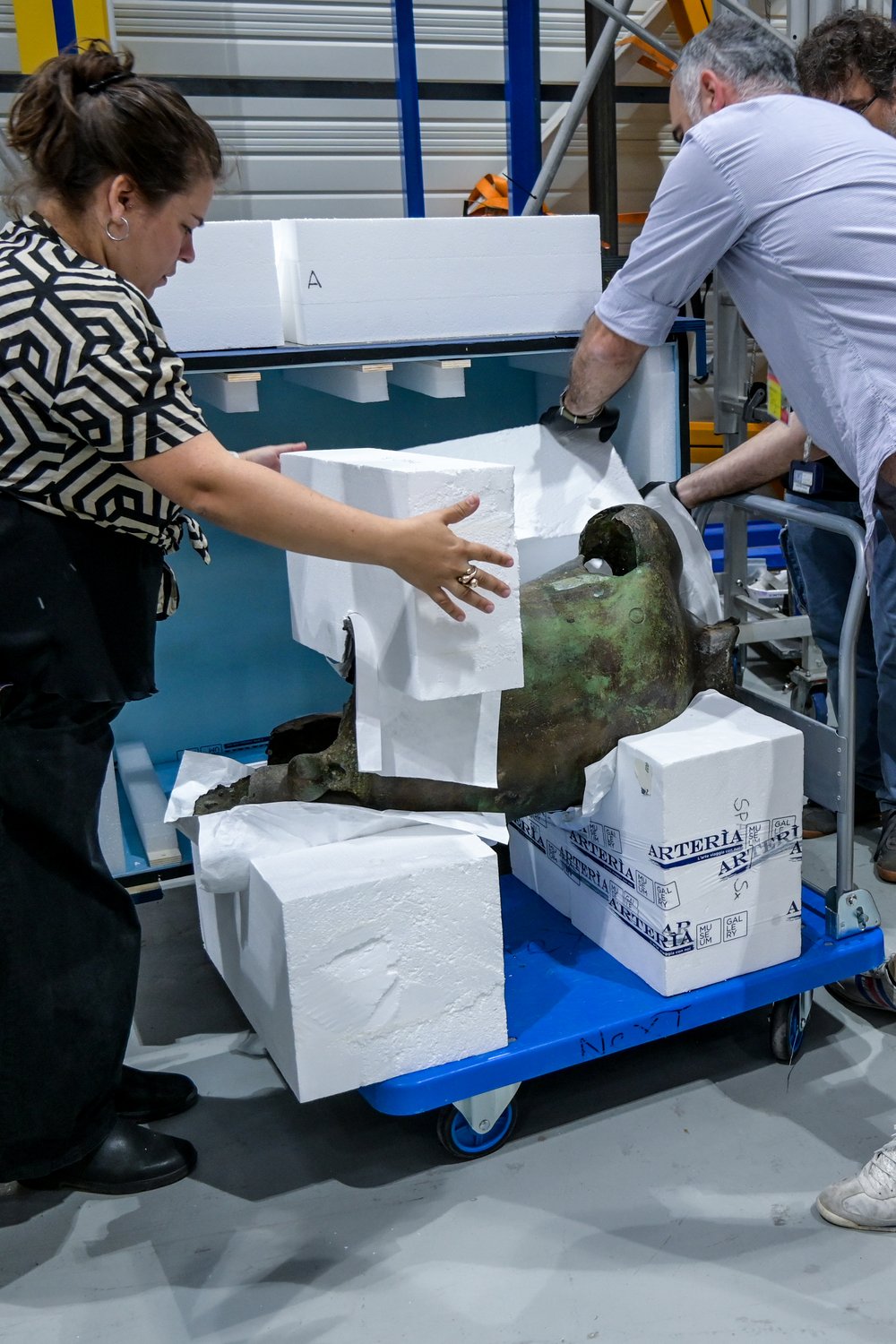
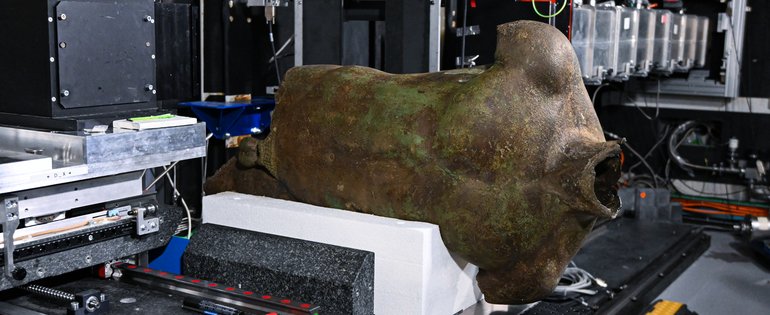
In June 2024, the sculpture travelled to the ILL to undergo neutron imaging. Neutrons allow to explore such precious and dense materials in a totally non-invasive way, providing a high-resolution imaging of the Torso. It was the first time that neutron imaging was applied to a bronze statue of monumental size. Indeed, neutron imaging is the only technique capable of providing a highly precise morphological and microstructural map of the entire statue without any risk of damaging it.
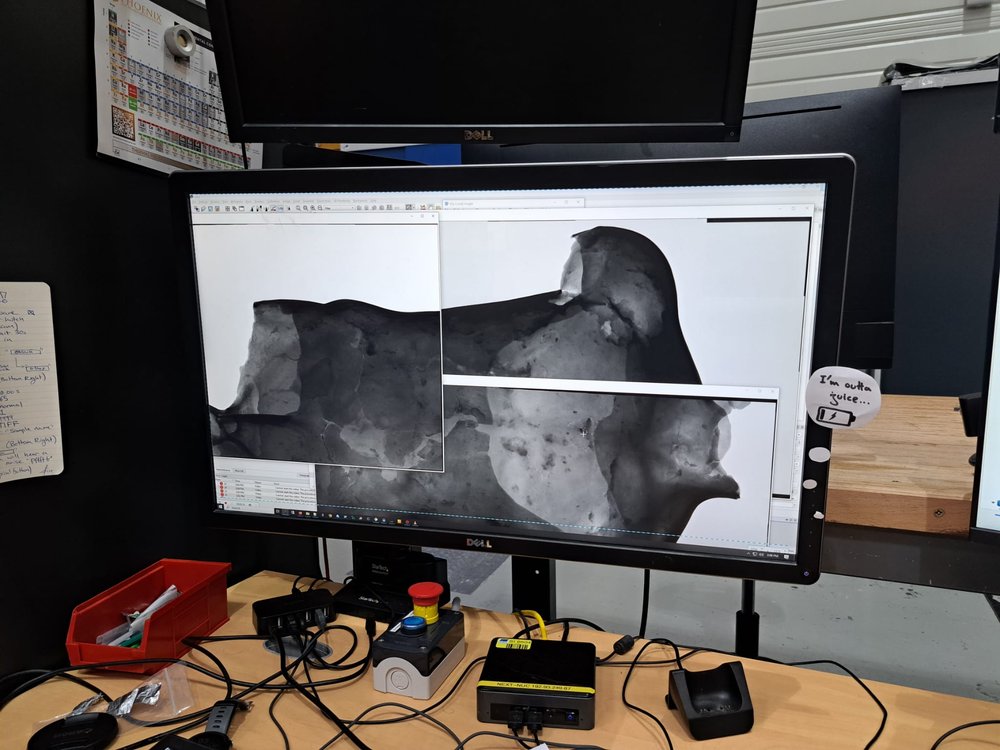
With its high neutron flux and excellent resolution, NeXT is ideal for identifying metallurgical features through neutron imaging. The dimensions of the sample were challenging. In order to cover the full volume, the statue was placed in two different positions. The team used the maximum field of view (170×170 mm FOV) compatible with the resolution required to identify the casting features (60 μm). Several radiographies were taken and ‘stitched’ together.
As the only technique able to map the conservation state of the entire artefact in a totally non-invasive way, neutron imaging provided essential information for the restoration process, allowing to describe in detail features such as metal porosity and density, presence of internal spacing chaplets, fractures, actual casting repair patches, etc. Such information is also highly relevant for understanding the crafting techniques, which in turn are relevant for pinpointing its origin and age.
This conservation and analysis project is the work of a wide, truly multidisciplinary team. The achievement was made possible thanks to the support of Friends of Florence, the work of restorer Nicola Salvioli, and the collaboration of numerous scholars, researchers and technicians who have contributed to this extraordinary journey of discovery and conservation. Neutron experiments were carried out at the ILL by Francesco Grazzi and Francesco Cantini from the Institute of Applied Physics “Nello Carrara” (CNR) in collaboration with ILL scientists Anna Fedrigo and Alessandro Tengattini. Giulia Basilissi, from the Florence Archeological Museum, who was entrusted with the technical and scientific direction of the intervention, closely followed the Torso and the measurements during the trip and its stay at ILL.