
Des neutrons observent le déplacement du lithium à l'intérieur d'une batterie tout-solide
09 Jul 2026Pour la première fois, des expériences de diffraction de neutrons menées à l'ILL ont permis de suivre en temps réel le déplacement du lithium au sein d'une batterie tout-solide en fonctionnement. Ces expériences ont révélé une complexité insoupçonnée pour la srtucture de la cathode, et de nouvelles pistes pour une conception plus efficace de ces batteries.
-
 Energie

Les batteries lithium font partie intégrante de notre quotidien où elles alimentent téléphones, ordinateurs portables et voitures électriques. La plupart utilisent un électrolyte liquide pour faciliter le déplacement des ions lithium entre cathode et anode lors des cycles de charge et de décharge. Cependant, ce liquide peut poser des problèmes de sécurité et limiter l'amélioration des performances.
Dans les batteries dites "tout-solide" ce liquide est remplacé par un matériau solide dans le but de les rendre plus sûres, plus compactes et plus puissantes, mais le défi est alors de garantir un fonctionnement fiable. Contrairement à ce qui se passe dans un liquide, les ions lithium doivent se déplacer ici à travers des matériaux solides. Si ce déplacement n'est pas uniforme, certaines parties de la batterie peuvent se charger plus rapidement que d'autres et réduire les performances de la batterie. »
Pour la première fois, une équipe de l'Institut Laue-Langevin et ses partenaires ont observé en temps réel le mouvement du lithium grâce à la diffraction des neutrons, la seule technique suffisamment sensible pour suivre ce déplacement au cœur d'une batterie épaisse en fonctionnement.
Leurs résultats ont révélé une complexité inattendue de la structure cristalline de la cathode, montrant que le mouvement du lithium à l'intérieur de la batterie n'était pas aussi uniforme qu'espéré. Comprendre ce comportement caché ouvrirait la voie à une optimisation de la conception de ces batteries.

Le défi de l'observation à l'intérieur des batteries à l'état solide
Les batteries lithium-ion sont devenues indispensables à la vie moderne, où elles alimentent tous types d'appareils, des appareils électroniques portables aux véhicules électriques. Lors de la charge et de la décharge, les ions lithium s'y déplacent entre cathode et anode.
Dans la plupart des batteries lithium-ion commerciales, ce mouvement s'effectue à travers un électrolyte liquide. Dans les batteriesdies "tout-solide" ce liquide est remplacé par un matériau solide, une voie prometteuse vers des batteries plus sûres, à densité énergétique plus élevée et plus performantes dans des conditions exigeantes, telles que les températures extrêmes. Cependant, le remplacement d'un liquide par un solide soulève de nouveaux défis car les ions lithium doivent désormais se déplacer à travers des matériaux solides et des interfaces solide-solide, où le transport peut être plus difficile et moins uniforme.
Pour concevoir de meilleures batteries tout-solide, les scientifiques doivent comprendre ce qui se passe à l'intérieur pendant leur fonctionnement. Ce n'est pas chose simple car les processus clés impliquent le lithium, un élément léger difficile à observer pour de nombreuses techniques expérimentales, et se déroulent au cœur d'un dispositif scellé, souvent au sein de couches de matériau relativement épaisses.
Il est donc complexe d'établir un lien entre les performances de la batterie et les changements structurels qui s'y produisent lors de la charge et de la décharge.
Pourquoi les neutrons sont-ils la sonde idéale pour étudier les batteries tout-solide ?
La diffraction neutronique offre une méthode particulièrement efficace pour relever ce défi. Contrairement aux rayons X, qui interagissent principalement avec les électrons, les neutrons interagissent directement avec les noyaux atomiques et cela les rend bien plus sensibles au lithium, l'élément même responsable du transfert de charge dans les batteries au lithium. Les neutrons peuvent également aider à distinguer des éléments ayant des numéros atomiques similaires, tels que les métaux de transition présents dans de nombreux matériaux de l'électrode positive.
Un autre avantage important est leur forte capacité de pénétration de la matière. Cela a permis aux chercheurs d'explorer l'intégralité du volume d'une pastille de batterie épaisse, et pas uniquement sa surface, et cela sans l'endommager, ce qui est essentiel pour en suivre le fonctionnement.
C'est cela qui rend la diffraction de neutrons sur poudre operando si précieuse : elle permet de suivre en temps réel les changements structuraux des matériaux de la batterie lors de ses cycles de charge et de décharge.
Une batterie fonctionnelle conçue pour les expériences neutroniques
C'est donc l'approche adoptée dans une étude récente publiée dans Advanced Energy Materials, où des chercheurs de l'ILL et leurs partenaires ont suivi le fonctionnement d'une batterie tout-solide lors de ses cycles de charge/décharge grâce à la diffraction de neutrons sur poudre operando.
La batterie étudiée comportait, une électrode positive en LiNi0,6Mn0,2Co0,2O2 connu sous le nom de NMC622, un électrolyte solide à base d'argyrodite à halogénures mixtes, Li5,4PS4,4BrCl0,6, et une électrode négative en alliage Li0,5In. L'un des principaux obstacles expérimentaux résidait dans la nécessité d'une grande quantité de matériau actif, au moins 140 mg de NMC622, pour obtenir un signal clair de diffraction neutronique. L'équipe a donc dû fabriquer une pastille de batterie de 2,5 mm d'épaisseur, ce qui a engendré de nouveaux défis électrochimiques, notamment une résistance interne accrue.
La solution à ce problème a été l'utilisation d'un électrolyte récemment mis au point, le Li5.4PS4.4BrCl0.6, dont la conductivité ionique est six fois supérieure à celle du Li6PS5Cl conventionnel. Malgré la forte épaisseur requise pour l'expérience de diffraction neutronique, cela a permis à l'équipe d'obtenir un déplacement entre électrodes d'environ 55 % du lithium du matériau actif - une performance comparable à celle de cellules standard à l'échelle du laboratoire.
Une complexité inattendue au sein de l'électrode positive révélée par les neutrons
L'expérience a été réalisée sur le diffractomètre D20 de l'ILL, en utilisant la cellule électrochimique tout-solide ILLBAT#5 nouvellement conçue. Cela a permis à l'équipe de recueillir des données de diffraction neutronique pendant les phases de charge et de décharge.
Au cours du premier cycle de charge-décharge à température ambiante, des diagrammes de diffraction neutronique ont été enregistrés toutes les heures. Ces mesures *operando* ont été combinées à des données de diffraction *ex situ* recueillies à des états de charge spécifiques bien définis, offrant ainsi aux chercheurs une vision détaillée de l'évolution de la batterie au fil des cycles.
Les résultats ont mis en évidence plusieurs points clés :
1- L'extraction du lithium n'était pas aussi uniforme que prévu
Lors de la charge, deux phases cristallines distinctes du NMC622, appelées H1 et H2, ont coexisté pendant la majeure partie du processus. Ce phénomène était inattendu compte tenu de la vitesse de cyclage très lente utilisée pour l'expérience (C/60), régime dans lequel l'électrode est normalement censée suivre une évolution monophasique plus régulière. L'équipe a attribué ce comportement à une répartition non uniforme du courant au sein de l'épaisse électrode positive, entraînant la présence simultanée d'états de charge différents selon les zones.
2- La température rend la réaction plus homogène
Lorsque l'expérience a été répétée à 100 °C, la température a rendu la réaction plus homogène, le comportement biphasique a disparu et l'électrode a suivi une évolution monophasique nette. Cela a confirmé qu'augmenter la température homogénéise la lithiation.
3- L'électrolyte solide est resté structurellement stable
Tout au long du premier cycle, l'électrolyte solide a conservé sa stabilité structurelle ; aucune modification significative des positions ou des intensités des pics n'a été observée dans les données de diffraction neutronique. Il s'agit d'un résultat encourageant pour la viabilité des batteries tout-solide à base de sulfures.
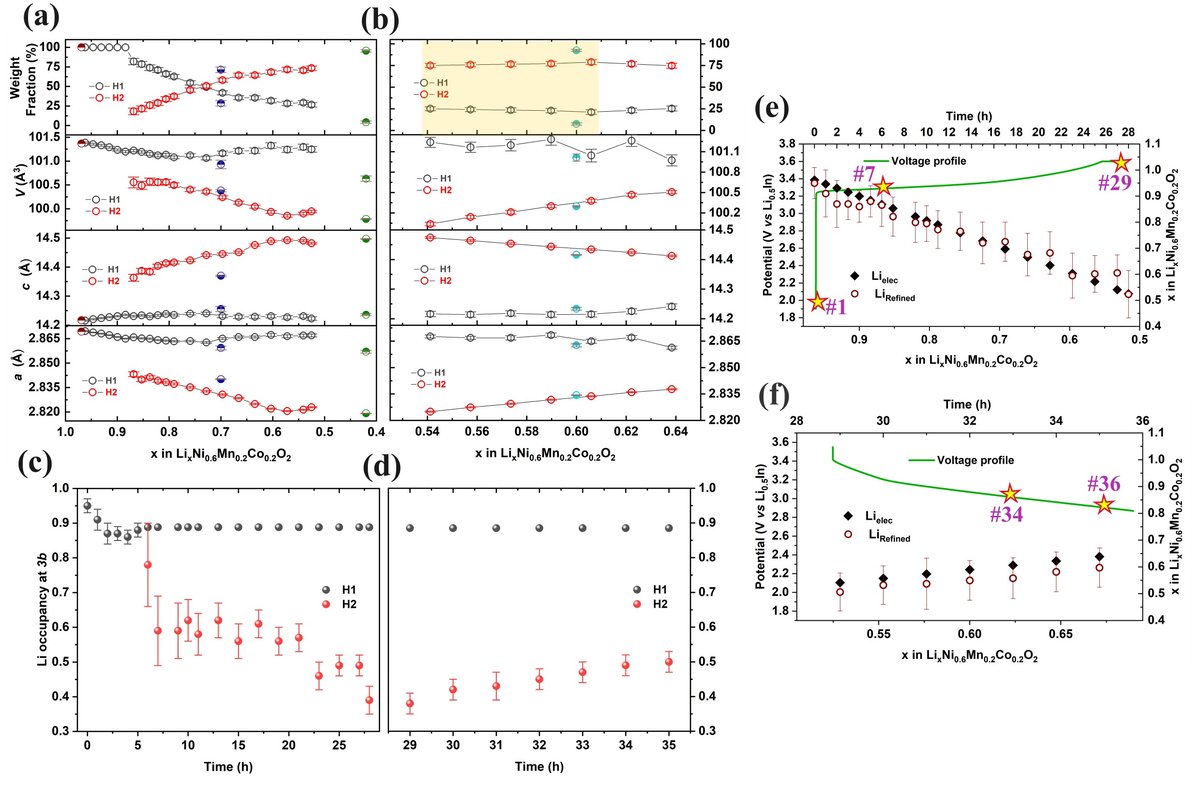
Figure 1. Observation de l'extraction du lithium en temps réel grâce aux neutrons.
La diffraction de neutrons sur poudre en mode operando a permis de suivre les transformations de la cathode NMC622 au cours du premier cycle de charge-décharge de la batterie tout-solide. La figure illustre l'évolution des phases H1 et H2, des paramètres de maille, du taux d'occupation du lithium et du profil de tension durant le cyclage à un régime C/60 et à température ambiante. La zone surlignée en jaune met en évidence une variation inhabituelle des fractions de phase, révélant un comportement non uniforme au sein de la cathode composite épaisse. À titre de comparaison, les données de diffraction de neutrons *ex situ* recueillies à des états de charge spécifiques sont également présentées (cercles colorés à moitié remplis). Crédit : Advanced Energy Materials (2026)
Dans leur ensemble, ces résultats soulignent l'intérêt unique de la diffraction de neutrons operando pour l'étude des batteries tout-solide en fonctionnement. En suivant, en temps réel, les fractions et paramètres de maille des phases cristallines ainsi que le taux d'occupation du lithium, cette technique met en lumière des processus que les mesures ex situ ne permettent pas de saisir.
Cette étude offre une vision plus précise des mécanismes d'extraction du lithium au sein d'une batterie tout-solide épaisse en fonctionnement ; elle montre également comment la conception de l'électrode, la conductivité ionique et les conditions de fonctionnement peuvent influencer l'uniformité de la réaction électrochimique. Ces enseignements seront certainement une aide à la conception optimisée des futures batteries tout-solide.
Référence:
S. A. Kumar, D. Shanbhag, O. Korjus, et al. “Investigation of the Lithium Extraction Mechanism from LiNi0.6Mn0.2Co0.2O2 by Using Operando Neutron Diffraction in an All-Solid-State Battery.” Advanced Energy Materials 16, no. 14 (2026) https://doi.org/10.1002/aenm.202506600
Instruments de l'ILL : ⚙️D20
Contact à l'ILL : Emmanuelle Suard
Institutions participants à cette recherche : Université de Picardie Jules Verne, Umicore, University of Bordeaux, TIAMAT, RS2E, Institut Universitaire de France