
This website is being migrated. In case you don't find the information you are looking for, the old website can be found here. Thank you for reporting any anomalies to communication@ill.eu.

ILL facilities overview

Facility large

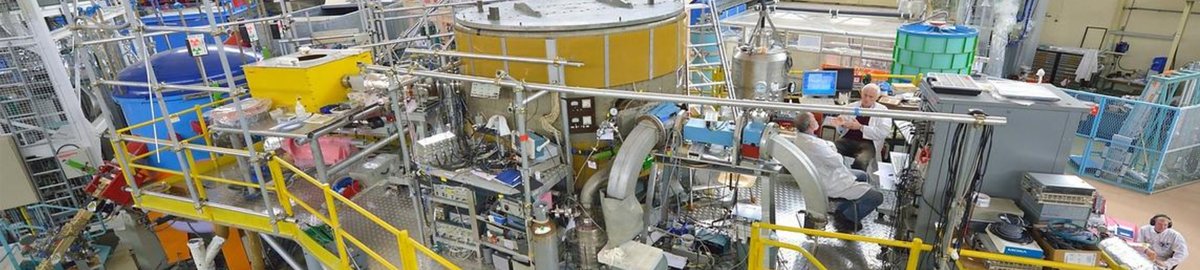
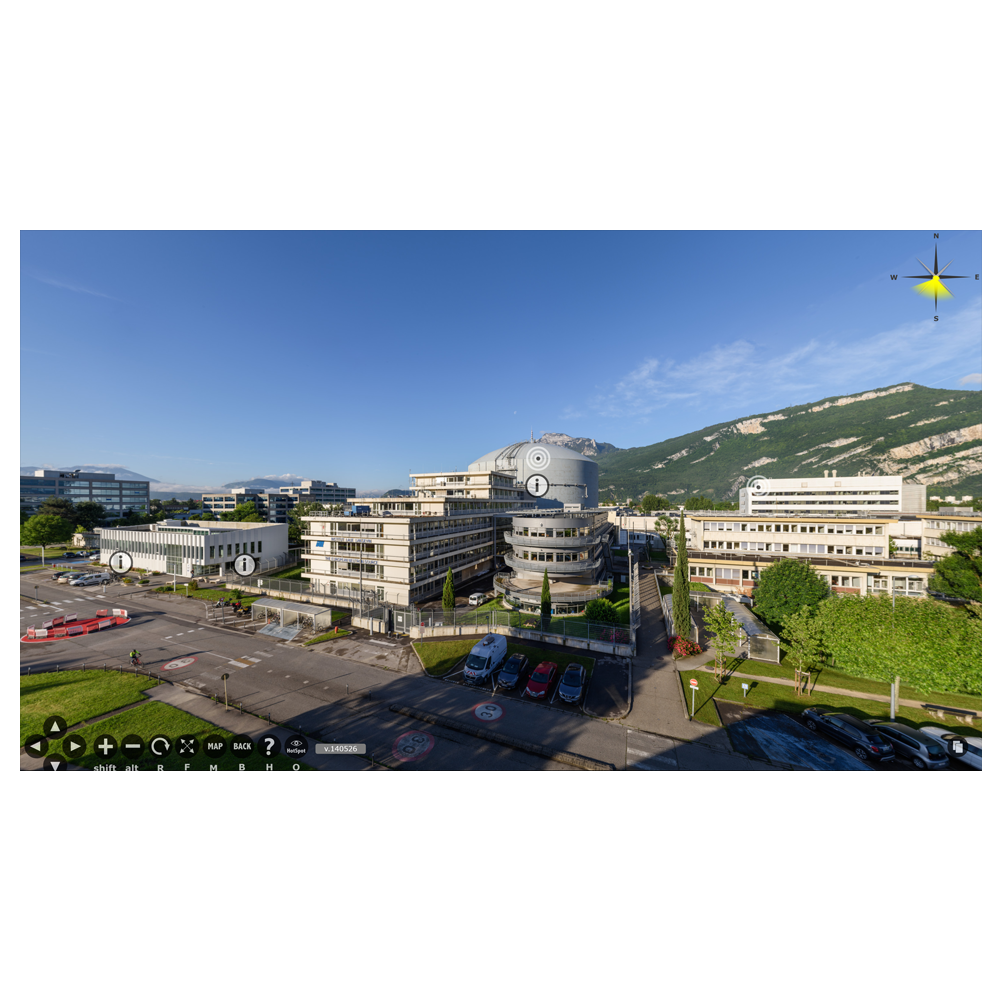
Under its dome, the ILL operates the High-Flux Reactor (HFR), a research reactor that delivers the world's most intense continuous neutron beams to a suite of over 40 state-of-the-art neutron instruments. The ILL also offers its scientific users an unparalleled set of support labs and scientific and technical services. The ILL's facilities enable research to be conducted across a wide range of scientific disciplines, providing the scientific community with advanced tools to study material structures, molecular dynamics, and magnetic properties.

The secret behind the ILL's modern and highly optimised infrastructure is the constant upgrade of its facilities and instruments. Through continuous investment in scientific infrastructures, instruments, support labs and services, the ILL has reached its highest performance level ever.

White square 50
ILL Hall
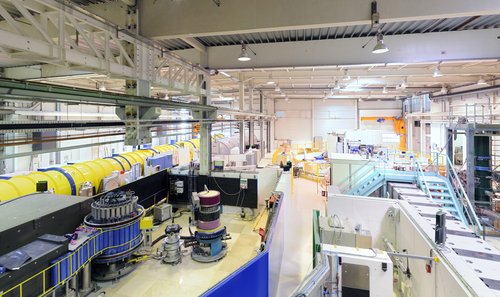
Experimental Hall ©Thion-Ecliptique

The ILL's suite of over 40 instruments is located in the reactor building (ILL5) and in the neutron guide halls (ILL7 and ILL22). The instruments are organised in groups according to the techniques they use. The user support infrastructure includes laboratories and technical facilities dedicated to advanced neutron sample environments, as well as to biology, chemistry, deuteration and soft matter.

Besides the user support facilities, ILL's installations include laboratories and technical facilities for research and development (R&D) in a comprehensive set of neutron technologies, in which the ILL is world leader.

Click HERE to enlarge the picture and HERE for a detailed map of the ILL instrument suite.

White square 50
Page
Techniques
The following pages describe the evolution of techniques at the ILL. Many of the latter were initiated at the ILL but testimonials, photos or documents are often rare, at least for the first 30 years of the ILL. Understanding how we arrived at current techniques is instructive and it is useful to d…
Page
Neutron detection
Neutrons detection at the ILLA draft history of neutron detection at the ILL is available here in French.Its content has not yet been validated and cannot be considered exact. If you wish to use or quote documents or information found there, it is important that you first check their validity.
Page
ILL facilities overview
Under its dome, the ILL operates the High-Flux Reactor (HFR), a research reactor that delivers the world's most intense continuous neutron beams to a suite of over 40 state-of-the-art neutron instruments. The ILL also offers its scientific users an unparalleled set of support labs and scientific an…
Page
Millennium programme
In 2000, the ILL launched the Millennium Programme designed to establish a sustainable strategy for the continual improvement of its infrastructure and instruments. Founded on new scientific opportunities, as well as exciting developments in instrument design – detectors, monochromators – spin pola…
Page
Sample environment
1970-1990, sample environments at the ILLby Alain Filhol and Eddy Lelièvre-BernaThe ILL owes its undoubted success to a conjunction of favourable factors. First and foremost of course, the ILL high-flux reactor, unique in its field and unrivalled since 1972; then the prolific use of guides to trans…
Page
Commercial cryostats
It was ILL's initial policy to buy the cryostats commercially available [1]. The directors had seen or used them in the past and thought they would do the job. As we shall see, this was far from the case, and cryostat design made major progress thanks to the ILL.