D33 - Massive dynamic q-range small-angle diffractometer
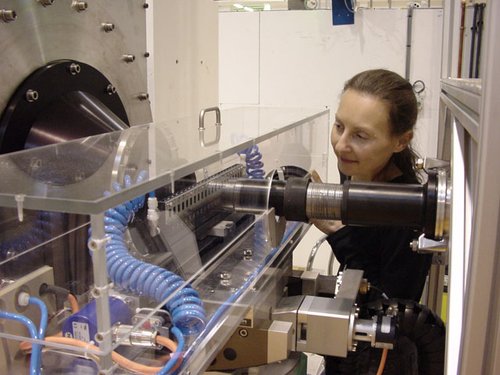
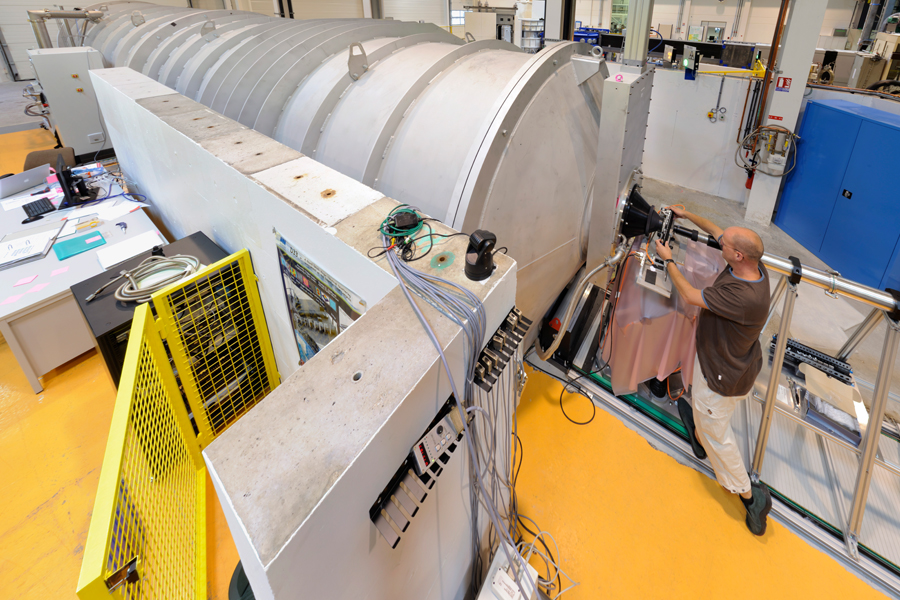
D33 is a highly tunable SANS instrument designed to characterise samples with typical sizes ranging from the nanometer scale to several tens of micrometres. In addition to a conventional monochromatic mode using a velocity selector, D33 offers a Time-of-Flight (TOF) mode to cover an enhanced dynamic q-range q-range qmax/qmin with flexible wavelength resolution in a single instrument setting, as well as TOF-GISANS, which eliminates the need to vary the incident angle and is particularly advantageous for aligned magnetic systems. Its spacious sample area accommodates bulky equipment and extreme sample environments, including high magnetic fields up to 17 T. Coupled with beam polarisation and 3He spin analysis, D33 expands capabilities for magnetic research and allows a more quantitative analysis of spin-incoherent samples, whilst its high flux enables kinetic experiments down to a time resolution on the order of a few milliseconds.
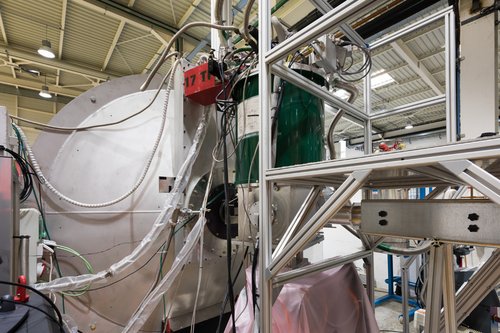
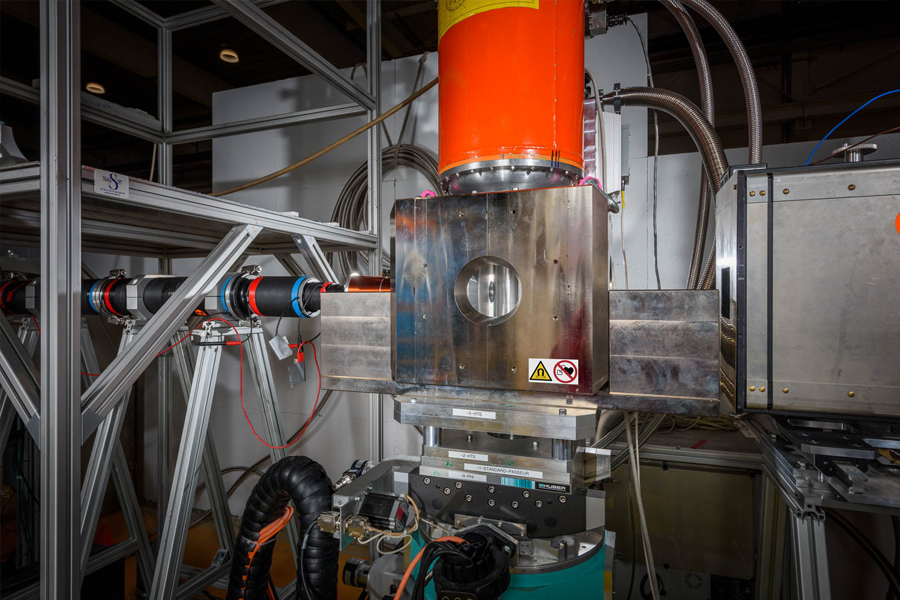
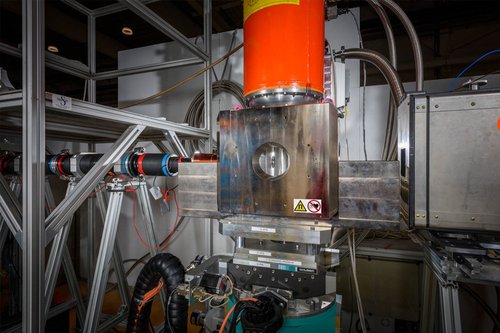
For materials science and physics studies, the usual array of sample environments, e.g. electromagnet, cryostat, cryomagnet and furnace, can be mounted easily on D33. The generous sample space can accommodate bulky and massive sample environments such as large cryomagnets, e.g. the 17 T cryomagnet belonging to the University of Birmingham, as well as 3He spin analysis setup.
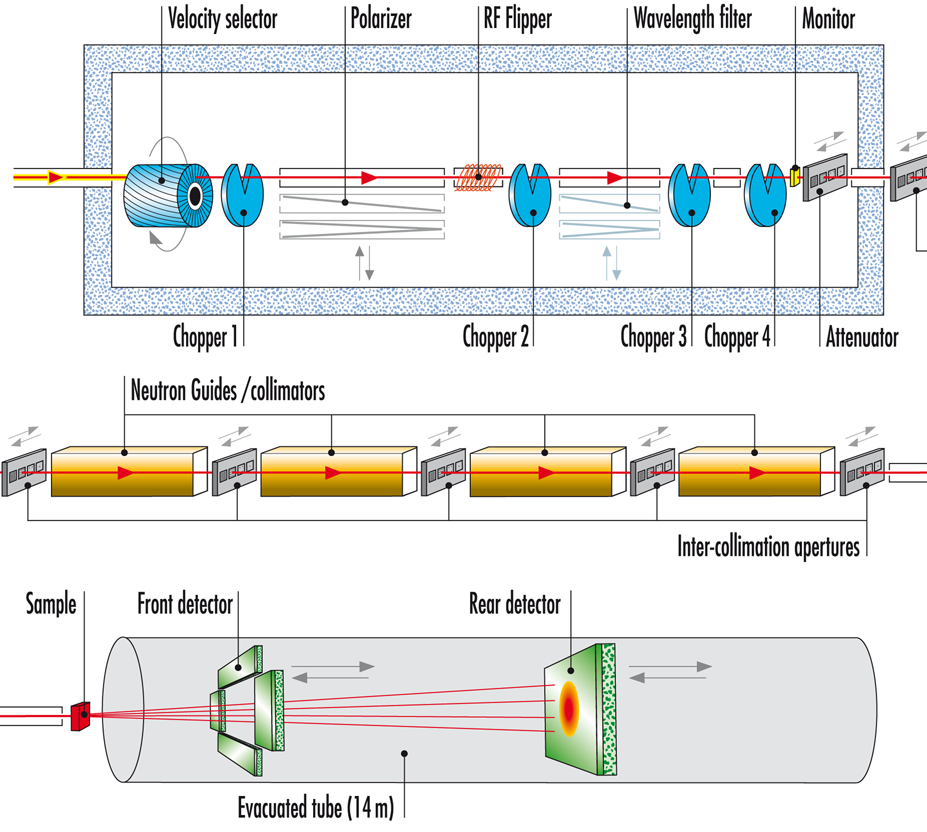
n the scheme, the instrument layout is shown in 3 parts:
- Top: neutron selection either with a neutron velocity selector (monochromatic mode) or with choppers (time of flight mode)
- Middle: collimation part
- Bottom: front and rear detector moving in the vacuum tube from 1.2 m to 12.8 m after the sample position.
In the scheme, the instrument layout is shown in 3 parts:
- Top: neutron selection either with a neutron velocity selector (monochromatic mode) or with choppers (time of flight mode)
- Middle: collimation part
- Bottom: front and rear detector moving in the vacuum tube from 1.2 m to 12.8 m after the sample position.
Applications
- Soft condensed Matter:
organic and inorganic colloidal particles; polymers blends or polymer in solution, gels, liquid crystals; self assembly of surfactant molecules. - Biology:
proteins, nucleic acids, biomembranes, vectors for drug delivery. - Material Science:
phase separation in alloys and glasses, morphologies of superalloys, microporosity in ceramics, interfaces and surfaces of catalysts. - Magnetism:
Flux line lattices in superconductors; magnetic correlations