Endofullerenes and carbon 60
27 Nov 2023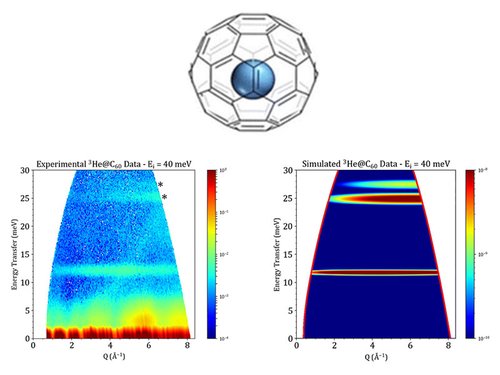
Fullerenes are molecular cages made purely from carbon, the most well-known being C-60 which is a molecular sphere made of 60 carbon atoms. The Nobel prize for chemistry in 1996 was awarded to Richard Smalley, Harry Kroto and Robert Curl for their serendipitous discovery of fullerenes.
More recently molecular surgery techniques have enabled small molecules like H2, H2O, CH4 and others to be encapsulated inside fullerenes. These molecular complexes are called endofullerenes and are of fundamental scientific interest as nanolaboratories for studying molecular interactions and quantum dynamics, as well as having numerous potential applications, such as nuclear hyper-polarisation for NMR.
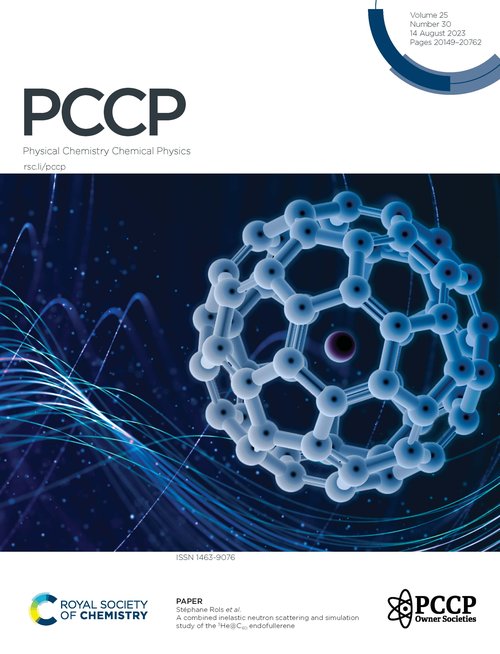
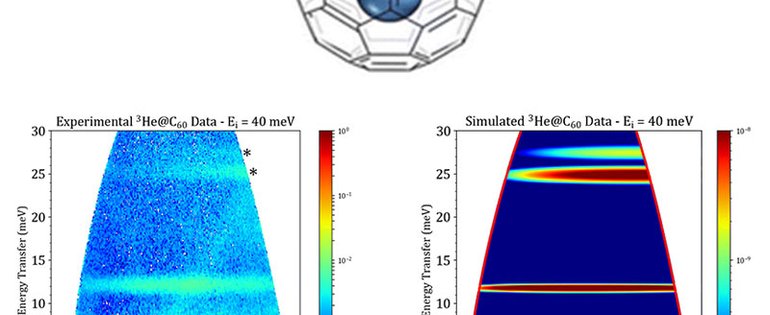
ILL, with colleagues from the Universities of Nottingham and Southampton and the ISIS facility, have studied endofullerenes extensively since 2009 mainly using inelastic neutron scattering. The most recent work was performed as the thesis project of Mohamed Aouane, entitled "Endofullerenes: Dynamics in confinement studied by neutron spectroscopy", for which Mohamed was awarded the prestigious, best thesis prize of the French Neutron Society (SFN) at their annual meeting a month ago. The most recent publication from this series of investigations, on helium-3 in C60, featured on the cover of the journal, Physical Chemistry Chemical Physics.
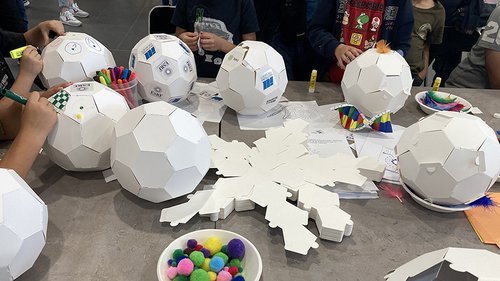
To celebrate these achievements with the general public at the French national ‘Fête de la Science’ in October, ILL, ESRF and EMBL combined to put fullerenes in the spotlight. In particular fullerene molecular models were made from pairs of templates of hexagons and pentagons, which occupied many minds and especially small hands for quite some time. Bridging the gap between nanoscale science and everyday life was made easier since the C60 models ressemble footballs – molecular footballs!