

2026 Nobel prize in Physics: spotlight on neutrinos
09 Oct 2026On this occasion, we join the celebration of neutrino physics congratulating Francis Halzen and taking the opportunity to remind some of the bits done at the ILL.
The neutrino is one of the most abundant particles in the universe yet the most elusive of all - and for that reason still far from being well understood. The importance of its study for physics and astrophysics is attested to by a remarkable series of Nobel Prizes: 1995 for the detection of the neutrino itself, 2002 for the first solar and cosmic neutrinos, 2015 for neutrino oscillations, and now 2026 to Francis Halzen for his contributions to the IceCube neutrino detector and the discovery of high-energy neutrinos.
From the early years to the 'reactor neutrino anomaly'
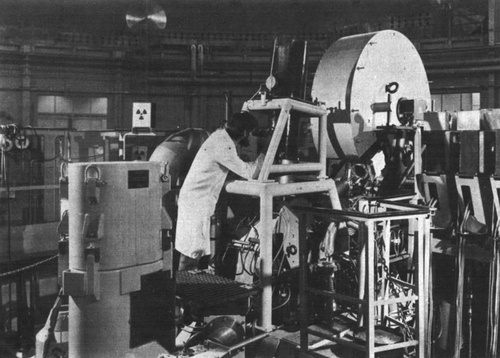
It all began with one of the institute's first-generation instruments: BILL, a high-resolution electron spectrometer that went into operation in July 1974 [1]. Conceived for conversion-electron spectroscopy in the service of nuclear structure physics, BILL soon took on a second task. From 1977 — one year after the launch of a programme to study neutrino cross-sections and oscillations at the ILL — BILL also measured the beta spectra of the fission products of ²³⁵U and later of other isotopes [2]. The logic is simple: every antineutrino from the reactor core is born together with a beta electron, which is far easier to observe — measuring the one maps the other. The beta spectra measured at BILL thus became the reference on which antineutrino predictions for reactor experiments worldwide were built — for more than two decades.
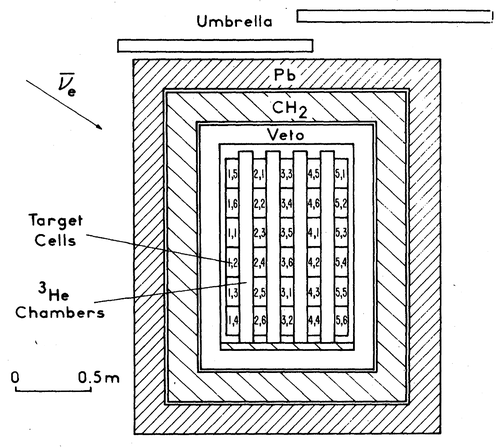
The central piece of the programme was a neutrino detector installed beneath the reactor core, only eight metres from it. Rudolf Mößbauer, Nobel laureate in physics and director of the ILL from 1972 to 1977, was instrumental in enabling this programme. The experiment set out to search for neutrino oscillations, and its results, published in 1981, delivered the first high-precision determination of a reactor's antineutrino flux and spectrum [3]. At the time, the measurement showed no deficit — but the comparison rested on the knowledge of the day.
Fourteen years later, a reanalysis of the experiment revealed a deficit [4] — the corrected reactor power, an improved ²³⁵U beta spectrum, refined nuclear corrections, and a substantially revised neutron lifetime (with several key measurements performed at the ILL) had shifted the prediction. In 2011, a comprehensive reanalysis of the short-baseline reactor experiments of the era, ILL's among them, concluded that they had all seen on average about six percent fewer antineutrinos than predicted: the "reactor antineutrino anomaly" [5].
STEREO: sterile neutrinos cannot explain
The anomaly called for an explanation — and the most spectacular one was at hand: perhaps the missing antineutrinos had transformed, on their short journey from the core to the detector, into a fourth kind of neutrino — a "sterile" state, absent from the Standard Model, that interacts with nothing at all. Testing this idea called for a dedicated experiment, able to resolve the subtle energy- and distance-dependent pattern that such oscillations would imprint.
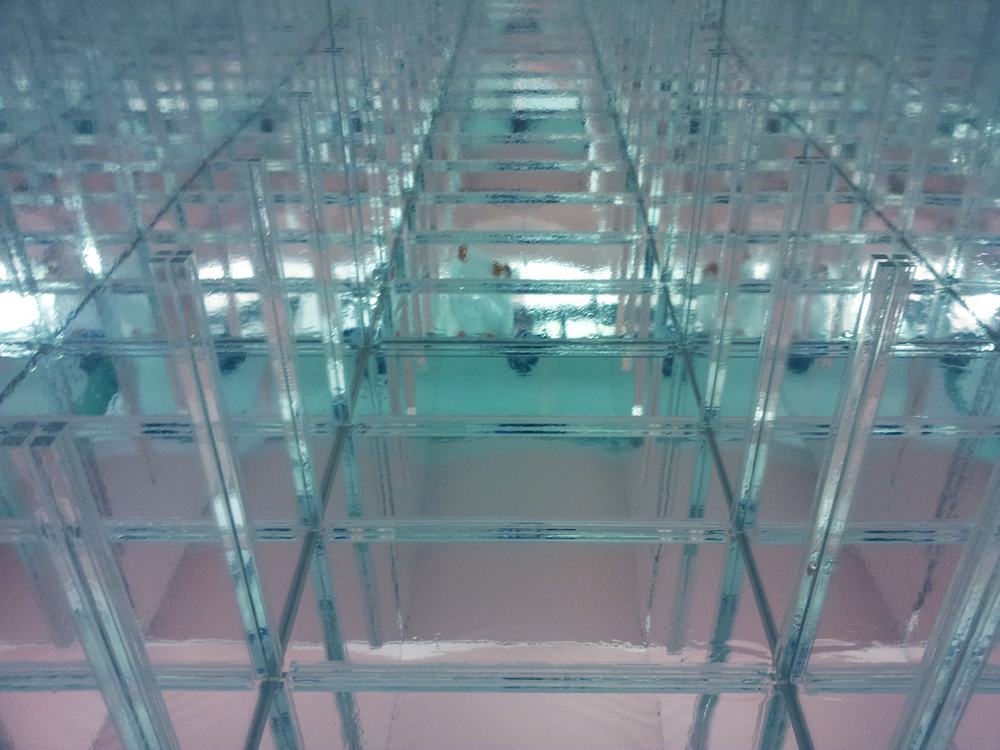
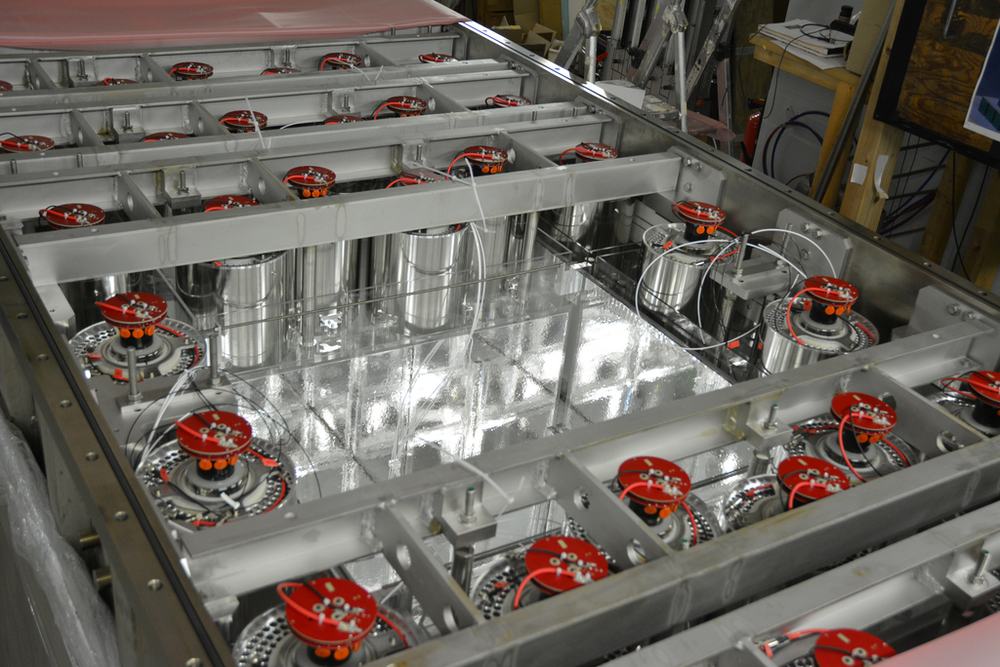
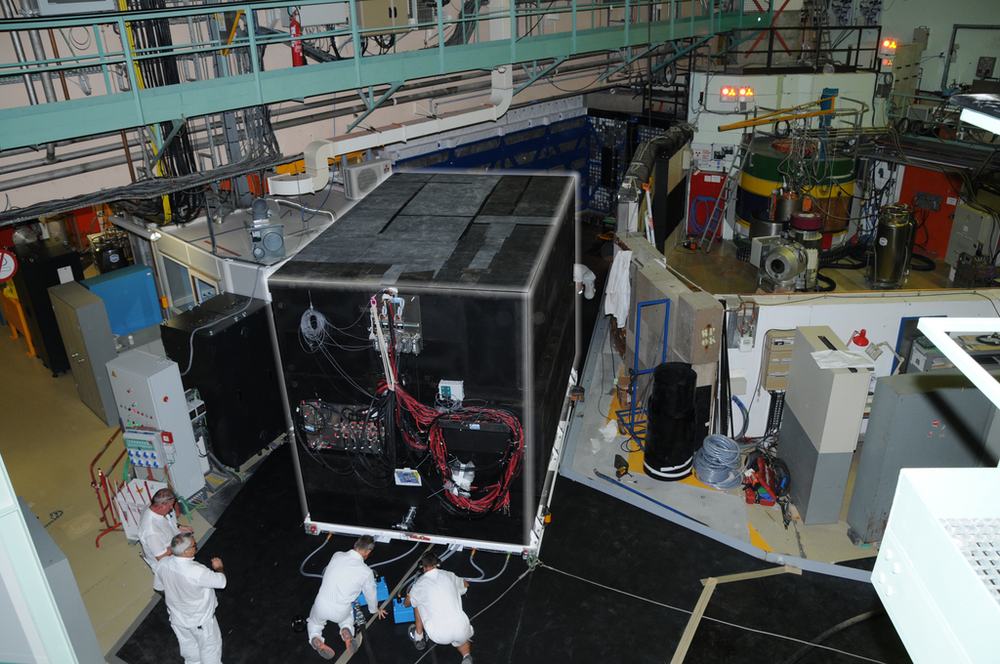
STEREO, build by an collaboration of French and German research institutes, came to be installed — once again at the ILL reactor, exploring a horizontal distance of 9-11 metres from the core. It was one of the pioneers of a worldwide programme of short-baseline reactor experiments. Its final verdict, published in 2023, rejected oscillations into sterile neutrinos as explanation for the anomaly and supported a far more prosaic cause — flaws in the very predictions that had stood, for decades, on the shoulders of BILL's beta spectra [6].
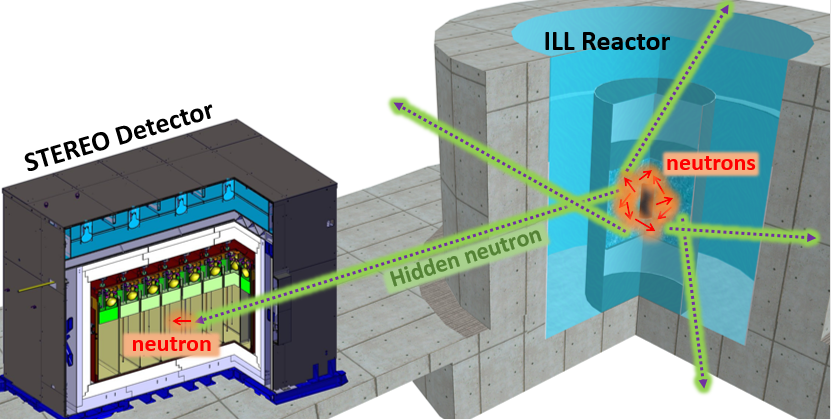
The STEREO setup at ILL.
RICOCHET: on the lookout for the neutrino-nucleus interaction
Up to that point, the story was about neutrino fluxes. Yet neutrinos have several other remarkable properties and behaviours. In particular, they can scatter coherently from an entire atomic nucleus, a process known as coherent elastic neutrino–nucleus scattering.
This interaction is the subject of study by RICOCHET, an international collaboration led by CNRS and hosted at the ILL.
When the momentum transferred during the collision is very small, the mediator of the weak force develops a long wavelength that spans the entire nucleus at once, causing all the nucleons to scatter the quantum wave in unison. The consequence is a cross-section proportional to the neutron number squared, far surpassing the familiar detection channels, and, remarkably, a process blind to flavour: any sufficiently low-energy neutrino or antineutrino, of any kind, will do. The process had been predicted in 1974, but its discovery came in 2017 at the Spallation Neutron Source (SNS) at Oak Ridge National Laboratory (USA), with neutrinos of some thirty MeV. For reactor antineutrinos, roughly ten times less energetic, the coherence is even complete — but their feeble energy makes the recoils so tiny that observing them demands detectors of unprecedented sensitivity.
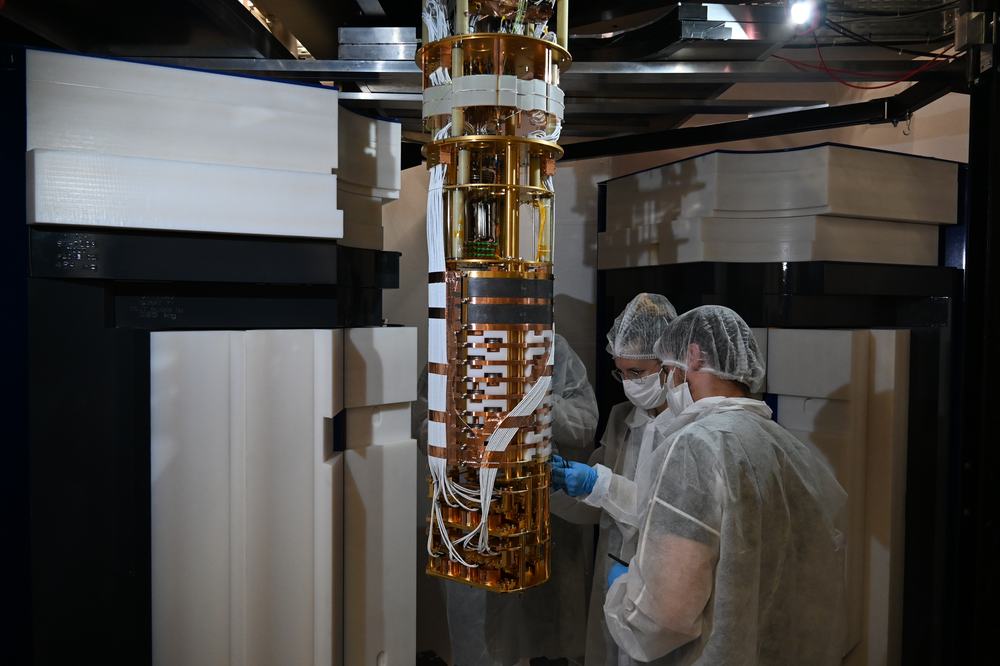
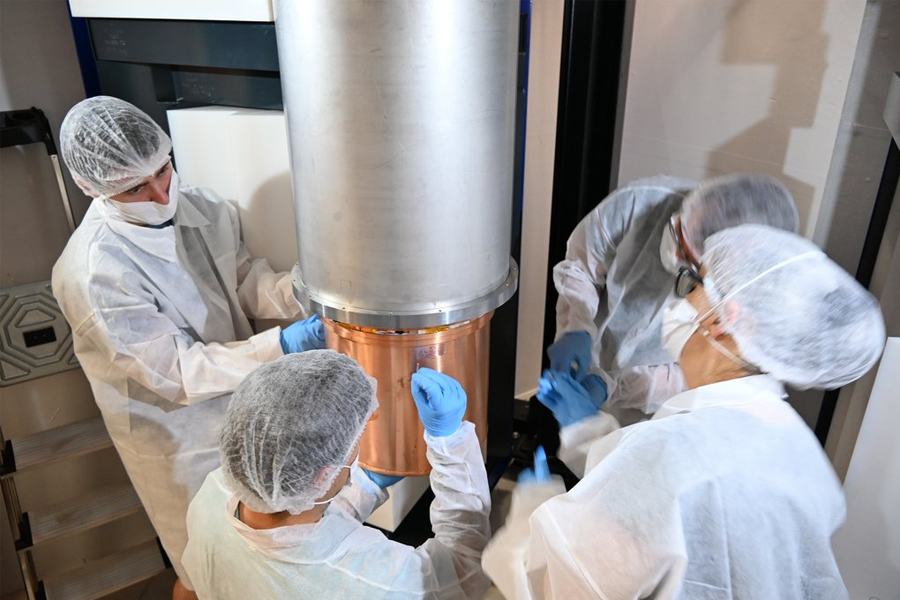
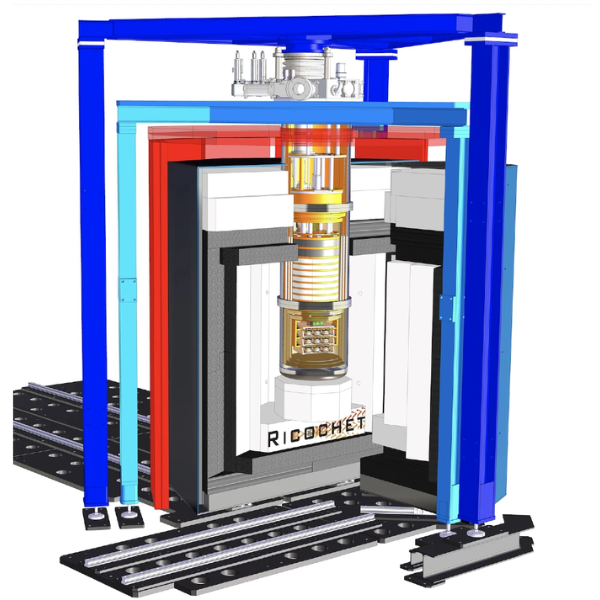
The RICOCHET instrument is an array of cryogenic detectors, operating at a few thousandths of a degree above absolute zero, installed on the former STEREO site. The expected rate is not small: above a recoil energy of 50 eV, the reactor's flux of 10¹² antineutrinos per square centimetre and per second induces of the order of ten nuclear recoils per day and per kilogram of detector material. But rare-event searches live or die by their backgrounds, and suppressing them costs a heavy toll — only a fraction of these recoils survives the selection. RICOCHET has finished commissioning [7] and started its science data taking in July 2025, but it cannot yet claim an observation of the process. The stakes, however, are clear: coherent scattering probes the neutrino's own coupling to matter at low energy and opens a new window to search for traces of physics beyond the Standard Model of particle physics.
The next chapter of the ILL's neutrino story remains to be written!
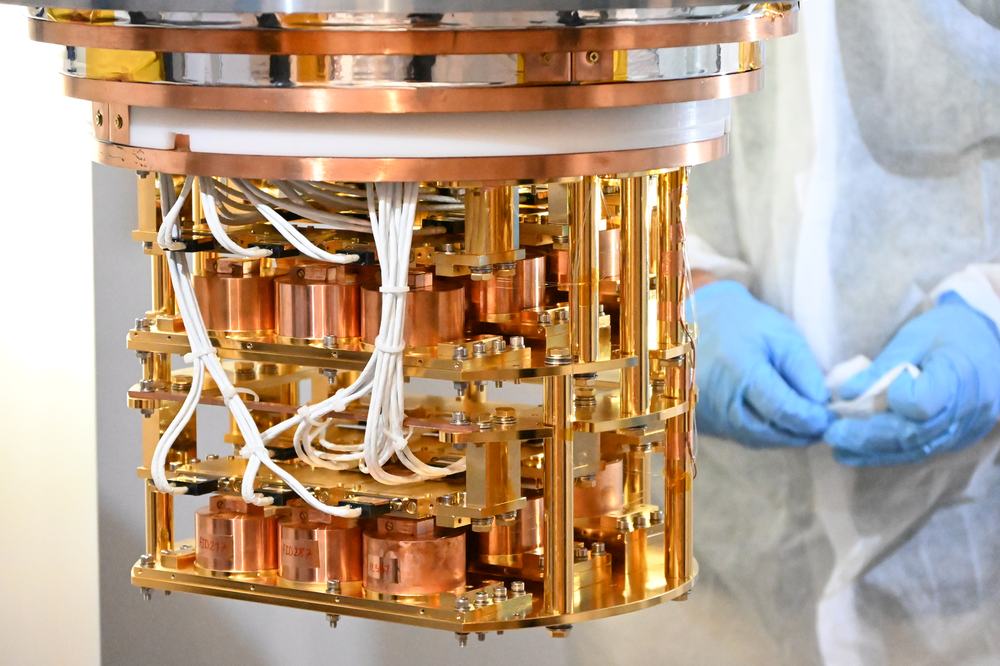
The Ricochet CryoCube detectors inside de cryostat.
References
[1] W. Mampe et al., Nucl. Instrum. Methods 154, 127 (1978)
[2] K. Schreckenbach et al. Phys. Lett. B 99, 251 (1981), 160, 325 (1985), F. von Feilitzsch et al., Phys. Lett. B 118, 162 (1982); A. A. Hahn et al., Phys. Lett. B 218, 365 (1989)
[3] H. Kwon et al., Phys. Rev. D 24, 1097 (1981)
[4] A. Hoummada et al., Appl. Radiat. Isot. 46, 449 (1995)
[5] G. Mention et al., Phys. Rev. D 83, 073006 (2011)
[6] H. Almazán et al. (STEREO collaboration), Nature613, 257 (2023)
[7] A. Armatol et al. (RICOCHET collaboration), Phys. Rev. D 112, 112019 (2025)